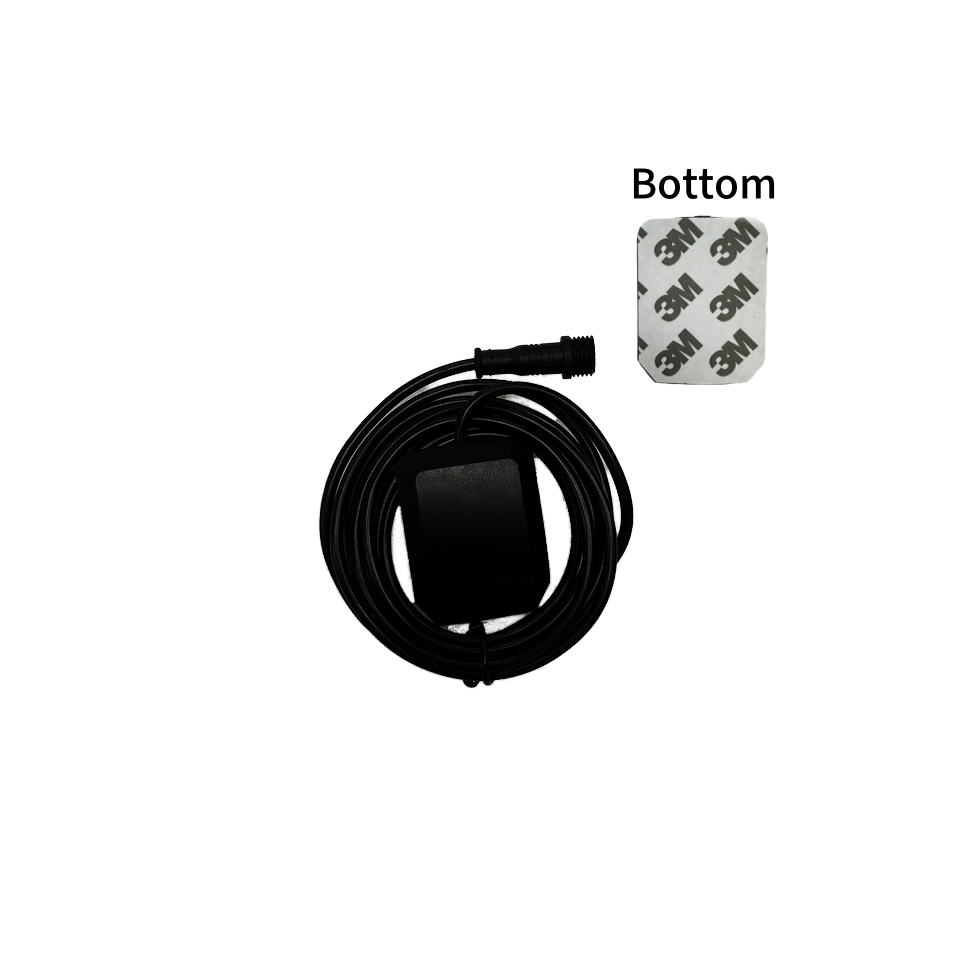
Modern Internet of Things networks demand continuous location tracking capabilities. Compact tracking hardware often faces severe energy constraint issues. High power consumption drains small internal batteries far too quickly. Fortunately, an advanced low-power GPS receiver resolves these tough engineering challenges easily. It enables long-term tracking for smart IoT applications worldwide.
This energy-efficient hardware guarantees lead-free compliance (RoHS standards) for eco-friendly electronics manufacturing. Furthermore, its integrated antenna design simplifies circuit board layouts significantly. Consequently, product designers build small wearable devices much faster today. Explore our complete product-category line to upgrade your tracking devices now.
4 Power and Signal Bottlenecks in IoT Deployments
Smart IoT hardware and portable devices face severe operational hurdles daily. Traditional location engines consume far too much battery energy constantly. Engineers regularly encounter four primary real-world performance challenges.
Frequent Battery Maintenance in Asset Trackers
Remote tracking devices monitor shipping containers across long international routes. High-power GNSS receivers drain internal batteries within a few weeks. Consequently, logistics companies incur massive labor costs replacing dead batteries. Long-range asset management requires energy-efficient positioning hardware engines.
Rapid Energy Depletion in Pocket Computers
Pocket computers and handheld equipment require compact battery enclosures. Conventional location modules consume continuous power during active signal tracking. Therefore, law enforcement personnel face dead devices during long shifts. Portable navigation equipment urgently demands low energy location receivers.
Thermal Failure in Automotive IoT Installations
Automotive tracking devices endure extreme temperatures inside engine compartments daily. Standard commercial receivers overheat and suffer signal drift under heavy heat. As a result, vehicle telematics platforms lose accurate track recording data points. Automotive-grade chips must operate reliably across extreme temperature ranges.
Poor Positioning Signal in Weak Canopy Areas
Agricultural measuring equipment often operates under dense forest canopies. Weak satellite signals force standard receivers to run prolonged search routines. Consequently, this continuous signal searching drains battery reserves very rapidly. IoT devices need high-gain active filters to lock weak signals instantly.
Technical Solutions: Built-in LNA, SAW, and Multi-GNSS Engine
The WT-2828-UN-TTL-AV platform resolves battery drain through integrated smart design. It combines the positioning chip and antenna within a single compact module.
Synchronous 3-GNSS Constellation Tracking
Our advanced module receives three satellite constellations simultaneously. Powered by the Ublox-8030 chip, it tracks 72 channels concurrently. It processes GPS/QZSS L1, GLONASS L1, BeiDou B1, and Galileo E1 signals. Furthermore, it supports all global satellite augmentation systems (SBAS) seamlessly. Check out our detailed technical-guide on multi-GNSS constellation tuning.
Built-in High-Gain LNA and SAW Filter
The module incorporates a specialized high-gain LNA and SAW filter directly. This dual-stage design boosts performance remarkably in weak signal zones. Even with passive antennas, it achieves ultra-fast positioning locks easily. Tracking sensitivity reaches an impressive -167 dBm for dense canopy tracking.
High Performance with Low Power Draw
Optimized power management circuits minimize active current draw during location acquisition. Fast hot starts complete in an average of just 1 second. Cold starts require only 26 seconds under normal sky conditions. Automotive-grade processing chips operate smoothly from -40°C to +105°C temperatures continuously.
Product Specifications & Parameter Comparison
The table below highlights key parameters for the WT-2828-UN-TTL-AV module.
| Parameter / Feature | WT-2828-UN-TTL-AV Engine | Standard Commercial GNSS Module |
| Supported Constellations | Synchronous 3-GNSS (GPS/BDS/GLN/GAL) | Single or Dual Constellation Only |
| Power & Sensitivity | Low Power Draw / -167 dBm Tracking | High Power Consumption / -155 dBm |
| Operating Temperature | Automotive Grade: -40°C to +105°C | Commercial Grade: -20°C to +70°C |
| Start-Up Performance | Hot Start: 1s Avg / Cold Start: 26s Avg | Hot Start: >5s / Cold Start: >40s |
| Signal Filtering | Integrated High-Gain LNA + SAW Filter | External Filtering Circuit Required |
| Horizontal Precision | 2.0m Horizontal / 30 ns Timepulse RMS | Basic 5.0m Horizontal Accuracy |
| Compliance Standard | Lead-free Compliance (RoHS Certified) | Basic Standard CE Rating |
Versatile Application Scenarios for IoT Deployment
This energy-efficient positioning module serves multiple modern technology sectors effectively.
-
Automotive IoT & Vehicle Navigation: Telematics hardware tracks fleet movement accurately with minimal battery drain.
-
Drones & Law Enforcement Equipment: Wearable devices acquire fast location locks during long field shifts easily.
-
Pocket Computers & Handheld Navigation: Portable field devices run all day on small internal battery packs.
-
Track Recording & Data Calibration: Surveyors record accurate GNSS data points effortlessly across remote field zones.
-
Agricultural Positioning & Timing Equipment: Agricultural machinery and base stations maintain precise atomic timing signals daily.
Empower your smart IoT applications with long-lasting location hardware today! Browse our comprehensive product-category catalog to order evaluation samples now.