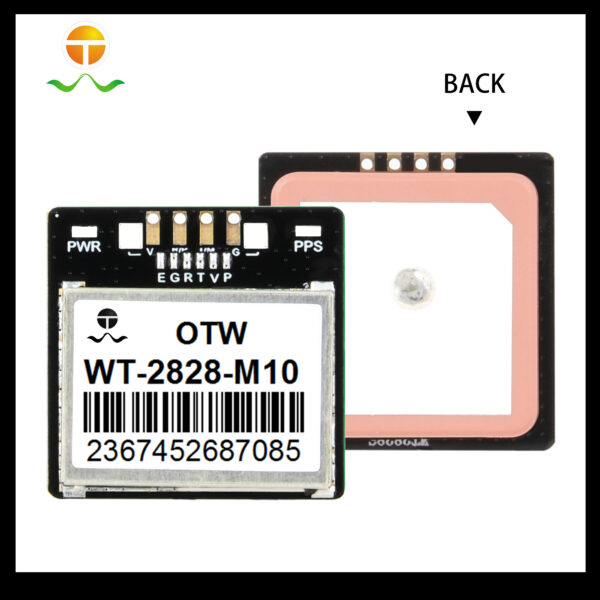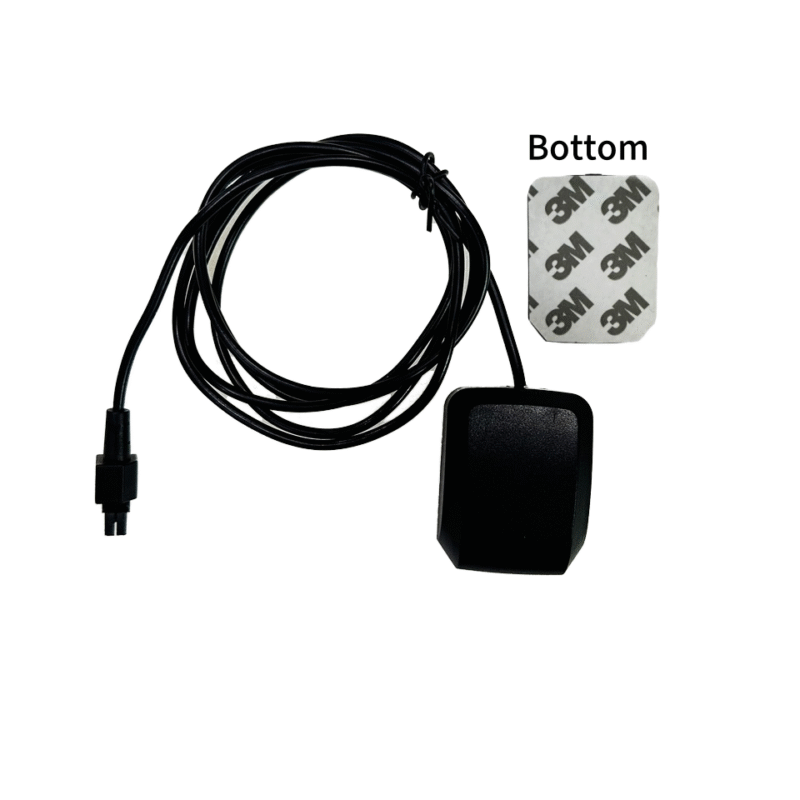
Modern navigation demands consistent signal precision across diverse operating environments. Complex designs often create difficult hardware layout choices. Signal interference degrades location accuracy in dense city areas. Fortunately, an integrated GPS receiver module resolves these tough engineering challenges easily. It powers next-generation navigation systems with reliable location data.
This high-performance hardware guarantees lead-free compliance (RoHS standards) for eco-friendly manufacturing. Furthermore, its integrated antenna architecture simplifies circuit board design. Consequently, product developers build sleek tracking solutions much faster. Explore our full product-category line to upgrade your tracking hardware today.
4 Navigation Pain Points in Demanding Scenarios
Vehicle telematics and handheld equipment face severe signal bottlenecks daily. Traditional location engines frequently fail under harsh physical conditions. Engineers regularly encounter four primary real-world performance challenges.
Weak Signal Loss in Urban Vehicle Navigation
High-rise buildings block satellite visibility across modern urban canyons. Traditional receivers experience severe signal dropouts during city trips. As a result, fleet management software receives inaccurate location updates. Vehicle navigation systems require high-gain active filtering components.
Slow Acquisition Delays in Field Drones
Unmanned aerial drones require fast signal fixes before takeoff. Standard receivers waste valuable time establishing cold-start positions. Consequently, commercial mapping drone crews lose precious operational battery life. Rapid position acquisition becomes a vital flight requirement.
Thermal Failure in Automotive IoT Applications
Automotive telematics hardware operates under extreme under-hood temperatures. Cheap commercial receivers fail when ambient temperatures rise rapidly. Therefore, vehicle tracking systems disconnect during extreme summer heat waves. Automotive-grade processing chips remain essential for continuous operation.
Excessive Battery Drain in Pocket Computers
Portable handheld devices require compact layout designs and long battery life. High-power location chips drain small internal power packs quickly. Thus, law enforcement officers face dead equipment during long shifts. Low-power consumption hardware design is an urgent necessity.
Technical Solutions: Built-in LNA, SAW, and Multi-GNSS Engine
The WT-2828-UN-TTL-M platform resolves signal degradation through smart integration. It combines the positioning chip and antenna within a single compact module.
Synchronous 3-GNSS Constellation Tracking
Our advanced engine receives three satellite constellations simultaneously. Powered by the Ublox-8030 chip, it tracks 72 channels concurrently. It processes GPS/QZSS L1, GLONASS L1, BeiDou B1, and Galileo E1 signals. Furthermore, it supports all global satellite augmentation systems (SBAS) seamlessly. Check out our detailed technical-guide on multi-GNSS constellation tuning.
Built-In High-Gain LNA and SAW Filter
The module incorporates a specialized high-gain LNA and SAW filter directly. This dual-stage design boosts performance remarkably in weak signal zones. Even with passive antennas, it achieves ultra-fast positioning locks. Tracking sensitivity reaches an impressive -167 dBm for dense canopy tracking.
Automotive-Grade Durability and Precise Timing
Automotive-grade chips operate reliably between -40°C and +105°C. Thus, harsh outdoor environments will not interrupt location tracking. Hot starts complete in an average of just 1 second. Cold starts require only 26 seconds under normal sky conditions. Timepulse signals achieve 30 ns RMS precision for timing equipment.
Product Specifications & Parameter Comparison
The table below highlights key parameters for the WT-2828-UN-TTL-M engine.
| Parameter / Feature | WT-2828-UN-TTL-M Receiver | Standard Commercial GNSS Module |
| GNSS Architecture | Synchronous 3-GNSS (GPS/BDS/GLN/GAL) | Single or Dual Constellation Only |
| Operating Temperature | Automotive Grade: -40°C to +105°C | Commercial Grade: -20°C to +70°C |
| Sensitivity Profile | Tracking: -167 dBm / Hot Start: -157 dBm | Tracking: -155 dBm / Hot Start: -145 dBm |
| Hot / Cold Start Time | Hot: 1s Avg / Cold: 26s Avg | Hot: >5s / Cold: >40s |
| Signal Amplification | Built-in High-Gain LNA + SAW Filter | External Filter Circuit Required |
| Horizontal Accuracy | 2.0m Horizontal / 0.1 m/s Velocity | Basic 5.0m Horizontal Accuracy |
| Compliance Standard | Lead-free Compliance (RoHS Certified) | Basic Standard CE Rating |
Diverse Application Scenarios for Industrial Deployment
This versatile positioning receiver serves multiple modern technology sectors efficiently.
-
Vehicle Navigation & Automotive IoT: Fleet vehicles track precise routes continuously through dense urban streets.
-
Drones & Law Enforcement Equipment: Unmanned aerial platforms acquire fast positioning locks before flight missions.
-
Pocket Computers & Portable Devices: Field technicians operate handheld devices all day with low power draw.
-
Track Recording & GNSS Calibration: Surveyors calibrate track recording data points effortlessly in the field.
-
Agricultural Positioning & Timing: Automated tractors and base stations maintain stable clock synchronization daily.
Power your modern navigation platforms with high-precision tracking modules today! Browse our complete product-category catalog to order evaluation samples now.