การนำทางอัตโนมัติต้องใช้ความแม่นยำอย่างไม่หยุดยั้งทั่วภูมิประเทศที่ซับซ้อน. ชิปผู้บริโภคมาตรฐานล้มเหลวภายใต้ความเครียดจากสิ่งแวดล้อมทางกายภาพที่รุนแรง. สัญญาณรบกวนหลายเส้นทางรบกวนการอัปเดตตำแหน่งแบบเรียลไทม์อย่างต่อเนื่อง. โชคดี, หนึ่ง โมดูลตำแหน่งทางอุตสาหกรรม แก้ไขปัญหาคอขวดในการดำเนินงานที่ยากลำบากเหล่านี้ได้อย่างราบรื่น. ให้การนำทางที่เสถียรสำหรับยานพาหนะที่ขับเคลื่อนด้วยตนเองและโดรนไร้คนขับ.
ฮาร์ดแวร์อุตสาหกรรมนี้ช่วยให้มั่นใจได้ การปฏิบัติตามข้อกำหนดไร้สารตะกั่ว (มาตรฐาน RoHS) สำหรับการผลิตสีเขียว. นอกจากนี้, สัญญาณความถี่คู่ช่วยปกป้องความสมบูรณ์ของข้อมูลในสภาพแวดล้อมวิทยุที่มีเสียงดัง. เพราะเหตุนี้, ทีมวิศวกรปรับใช้แพลตฟอร์มอัตโนมัติด้วยความมั่นใจอย่างสมบูรณ์ในขณะนี้. สำรวจเต็มรูปแบบของเรา หมวดหมู่สินค้า สายการอัปเกรดฮาร์ดแวร์กลุ่มยานพาหนะของคุณวันนี้.

4 จุดปวดในการนำทางในระบบอัตโนมัติ
โดรนทางอากาศไร้คนขับและยานพาหนะอัตโนมัติต้องเผชิญกับสภาพแวดล้อมทางกายภาพที่รุนแรงทุกวัน. เครื่องยนต์ระบุตำแหน่งขั้นพื้นฐานต้องดิ้นรนระหว่างการเคลื่อนย้ายด้วยความเร็วสูง. วิศวกรมักเผชิญกับความท้าทายด้านตำแหน่งการปฏิบัติงานหลักสี่ประการ.
ความไม่เสถียรของเฟสความเร็วสูงบนโดรน
โดรนส่งสินค้าเชิงพาณิชย์เคลื่อนที่ด้วยความเร็วสูงผ่านอากาศที่มีลมแรง. โมดูลความถี่เดี่ยวมาตรฐานประสบปัญหาการกระวนกระวายใจของเฟสอย่างรุนแรงในระหว่างการหมุนอย่างรวดเร็ว. เพราะเหตุนี้, อุปกรณ์ควบคุมการบินสูญเสียเสถียรภาพระดับมิลลิเมตรระหว่างลำดับการลงจอดอัตโนมัติ. ระบบไร้คนขับจำเป็นต้องมีโมดูลการติดตามที่รีเฟรชสูงเพื่อรักษาสมดุล.
การบิดเบือนหลายเส้นทางในเมืองสูง
ตึกระฟ้าสะท้อนสัญญาณดาวเทียมก่อนที่จะไปถึงเสาอากาศรถยนต์โดยตรง. สัญญาณที่สะท้อนกลับทำให้เกิดข้อผิดพลาดในการเคลื่อนตำแหน่งครั้งใหญ่ข้ามทางเดินในตัวเมือง. ส่งผลให้, รถยนต์ขับเคลื่อนอัตโนมัติจะคำนวณตำแหน่งเลนบนถนนที่พลุกพล่านอย่างไม่ถูกต้อง. การกรองความถี่คู่จำเป็นเพื่อขจัดสัญญาณรบกวนแบบหลายเส้นทางอย่างสมบูรณ์.
อุณหภูมิกลางแจ้งที่รุนแรงบนเรือประมง
อุปกรณ์ติดตามทางทะเลทนทานต่อการเปลี่ยนแปลงของอุณหภูมิที่รุนแรงในทะเล. การแผ่รังสีแสงอาทิตย์จะทำให้ตัวเรือนอิเล็กทรอนิกส์ที่ไม่มีฉนวนหุ้มมีอุณหภูมิสูงกว่า 70°C ปรุงอาหารทุกวัน. เครื่องรับมาตรฐานจะพบกับความถี่ที่ลอยไปภายใต้การสัมผัสความร้อนจัด. ระบบทางทะเลต้องการส่วนประกอบทางอุตสาหกรรมที่ได้รับการจัดอันดับสำหรับช่วงความร้อนที่รุนแรง.
การใช้พลังงานมากเกินไปกับอุปกรณ์สวมใส่แบตเตอรี่
หน่วยติดตามภาคสนามขนาดกะทัดรัดต้องใช้เวลาใช้งานแบตเตอรี่นานระหว่างการปฏิบัติงาน. ชิประบุตำแหน่งพลังงานสูงจะระบายเซลล์พลังงานแบบพกพาภายในไม่กี่ชั่วโมง. ดังนั้น, ช่างเทคนิคภาคสนามสูญเสียการติดตามตำแหน่งที่สำคัญระหว่างภารกิจอันยาวนาน. สถาปัตยกรรมฮาร์ดแวร์ที่ใช้พลังงานต่ำยังคงเป็นข้อกำหนดการออกแบบเร่งด่วน.
โซลูชั่นทางเทคนิค: L1 + L5 ความถี่คู่และอัตราการรีเฟรชสูง
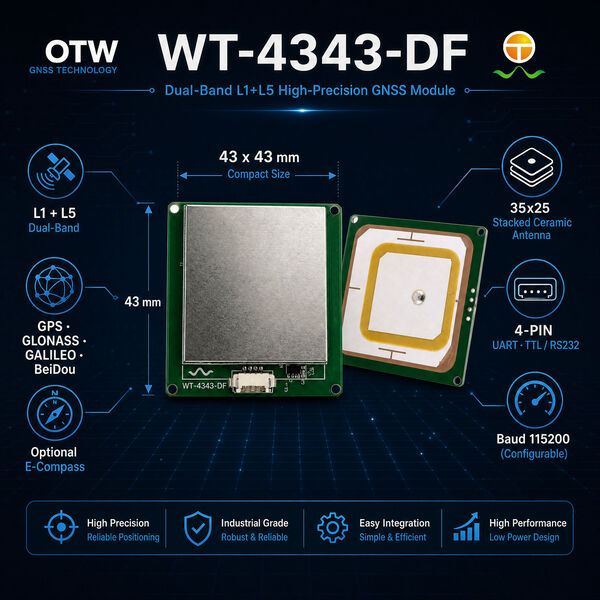
แพลตฟอร์ม OTW WT-4343-DF แก้ไขการลดทอนสัญญาณด้วยการออกแบบขั้นสูง. โดยให้ความแม่นยำระดับเดซิเมตรที่เชื่อถือได้ในสภาพแวดล้อมเชิงพาณิชย์ที่มีความต้องการสูง.
L1 + สถาปัตยกรรมสัญญาณความถี่คู่ L5
เอ็นจิ้นขั้นสูงของเราประมวลผลสัญญาณแบนด์ L1 และ L5 พร้อมกัน. ติดตาม GPS/QZSS, BDS, กาลิเลโอ, และกลุ่มดาว GLONASS พร้อมกัน. ข้าม 128 ช่องทางการติดตาม, เทคโนโลยีความถี่คู่จะยกเลิกความล่าช้าของไอโอโนสเฟียร์โดยอัตโนมัติ. ทัศนวิสัยของดาวเทียมเพิ่มขึ้นอย่างมากแม้อยู่ใต้ร่มไม้ที่หนาแน่น. ตรวจสอบรายละเอียดของเรา คู่มือทางเทคนิค เกี่ยวกับวิธีการประมวลผลสัญญาณแบบดูอัลแบนด์.
ความไวสูงและการรับสัญญาณใหม่อย่างรวดเร็ว
เครื่องขยายสัญญาณรบกวนต่ำในตัวให้คะแนนความไวในการติดตามที่ยอดเยี่ยม -167dBm. โมดูลจับสัญญาณอ่อนได้ถึง -160dBm ใต้หลังคา. นอกจากนี้, โดยเฉลี่ยแล้ว hot start จะเสร็จสิ้นภายในเวลาเพียงเท่านั้น 1 ที่สอง. การเริ่มเย็นต้องใช้เท่านั้น 28 วินาทีภายใต้สภาพท้องฟ้าปกติ.
ความทนทานต่อความร้อนทางอุตสาหกรรมและประสิทธิภาพการใช้พลังงาน
กำลังไฟในการทำงานใช้เพียง 103mW ที่ 1.8V ในระหว่างการติดตามแบบแอ็คทีฟ. โหมดสแตนด์บายใช้พลังงานต่ำกว่า 20μW เพื่อถนอมแบตเตอรี่หลัก. นอกจากนี้, ตัวเรือนอุตสาหกรรมทนทานต่ออุณหภูมิสุดขั้วตั้งแต่ -40°C ถึง 85°C. อัตราการอัพเดตสูงถึง 10 Hz รองรับการเคลื่อนไหวอย่างรวดเร็วถึง 515 M/S.

ข้อกำหนดผลิตภัณฑ์ & การเปรียบเทียบพารามิเตอร์
ตารางด้านล่างเน้นการวัดประสิทธิภาพสำหรับโมดูล WT-4343-DF.
| พารามิเตอร์ / คุณสมบัติ | โมดูลอุตสาหกรรม OTW WT-4343-DF | ตัวรับสัญญาณ GNSS ของผู้บริโภคมาตรฐาน |
| ความถี่ที่รองรับ | L1 + L5 ระบบหลายความถี่คู่ | L1 แบนด์เดียวเท่านั้น |
| ความแม่นยำของตำแหน่ง | เดซิเมตร-ระดับ (<2ม. + 1ppm CEP50) | ระดับมิเตอร์พื้นฐาน (5ม. – 10ม.) |
| อุณหภูมิการทำงาน | เกรดอุตสาหกรรม: -40°ซ ถึง +85°ซ | เกรดเชิงพาณิชย์: -20°ซ ถึง +60°ซ |
| ความไวในการติดตาม | การติดตาม: -167DBM / เย็น: -148DBM | การติดตาม: -155DBM / เย็น: -135DBM |
| อัตราการอัพเดท & ความเร็ว | ขึ้นไป 10 Hz / ความเร็วสูงสุด: 515 M/S | มาตรฐาน 1 Hz / ความเร็วสูงสุด: 100 M/S |
| การใช้พลังงาน | วิ่ง: 103มิลลิวัตต์@1.8V / สแตนด์บาย: <20ไมโครวัตต์ | วิ่ง: >250เมกะวัตต์ / สแตนด์บาย: >100ไมโครวัตต์ |
| มาตรฐานการปฏิบัติตาม | การปฏิบัติตามข้อกำหนดที่ปราศจากสารตะกั่ว (ได้รับการรับรองมาตรฐาน RoHS) | ระดับมาตรฐาน CE ขั้นพื้นฐาน |
สถานการณ์การใช้งานที่หลากหลายสำหรับ Next-Gen Mobility
โมดูลความถี่คู่อเนกประสงค์นี้ช่วยเพิ่มศักยภาพให้กับภาคอุตสาหกรรมสมัยใหม่หลายแห่งได้อย่างมีประสิทธิภาพ.
-
ยานพาหนะขับเคลื่อนอัตโนมัติ: รถยนต์ที่ขับเคลื่อนด้วยตนเองดำเนินการควบคุมบนทางหลวงอย่างแม่นยำด้วยความแม่นยำระดับเดซิเมตรที่เชื่อถือได้อย่างต่อเนื่อง.
-
โดรนเชิงพาณิชย์: อากาศยานไร้คนขับดำเนินการเส้นทางบินอัตโนมัติอย่างปลอดภัยจนถึง 515 ความเร็วเมตร/วินาที.
-
เรือประมงทะเล: เรือเดินทะเลรักษาการติดตามตำแหน่งที่แม่นยำภายใต้สภาวะความร้อนของน้ำเค็มที่รุนแรง.
-
ระบบ IoT อุตสาหกรรม: อุปกรณ์ลอจิสติกส์อัจฉริยะติดตามการเคลื่อนไหวของสินทรัพย์ได้อย่างง่ายดายทั่วลานโรงงานขนาดใหญ่.
ติดตั้งแพลตฟอร์มอัตโนมัติของคุณด้วยเอ็นจิ้นระบุตำแหน่งความถี่คู่ที่มีความแม่นยำสูงวันนี้! เรียกดูที่ครอบคลุมของเรา หมวดหมู่สินค้า แค็ตตาล็อกเพื่อสั่งตัวอย่างการประเมินทันที.