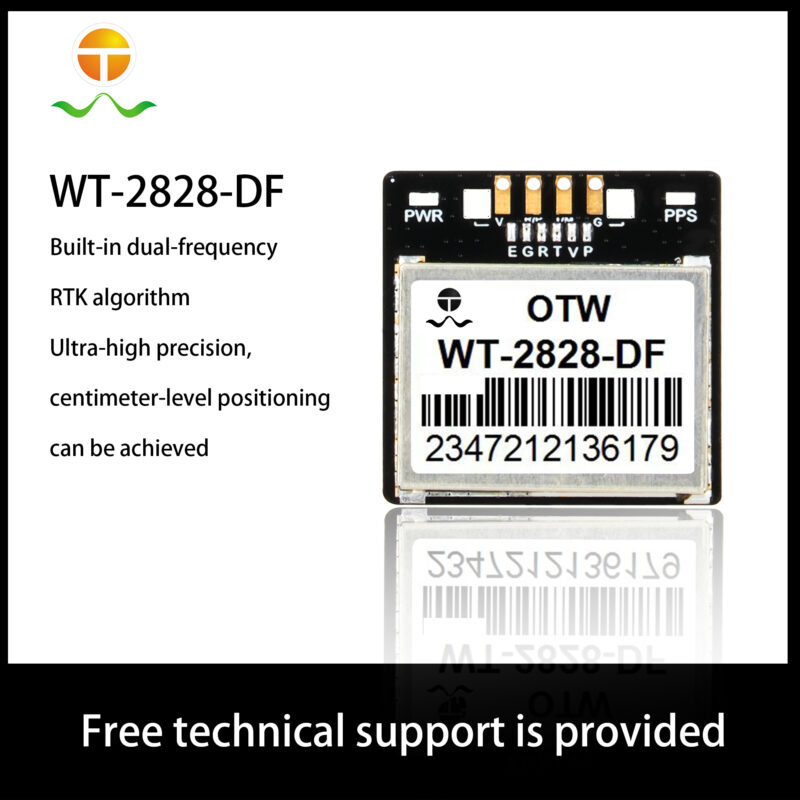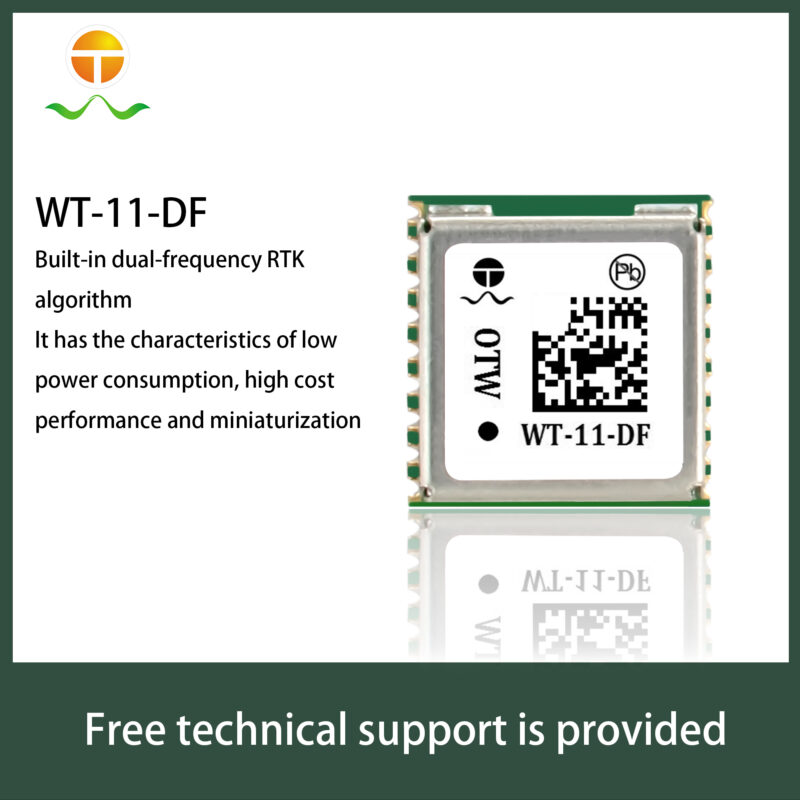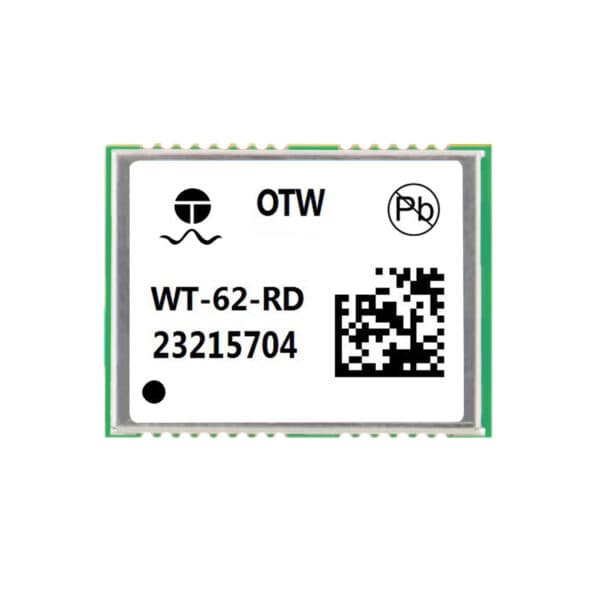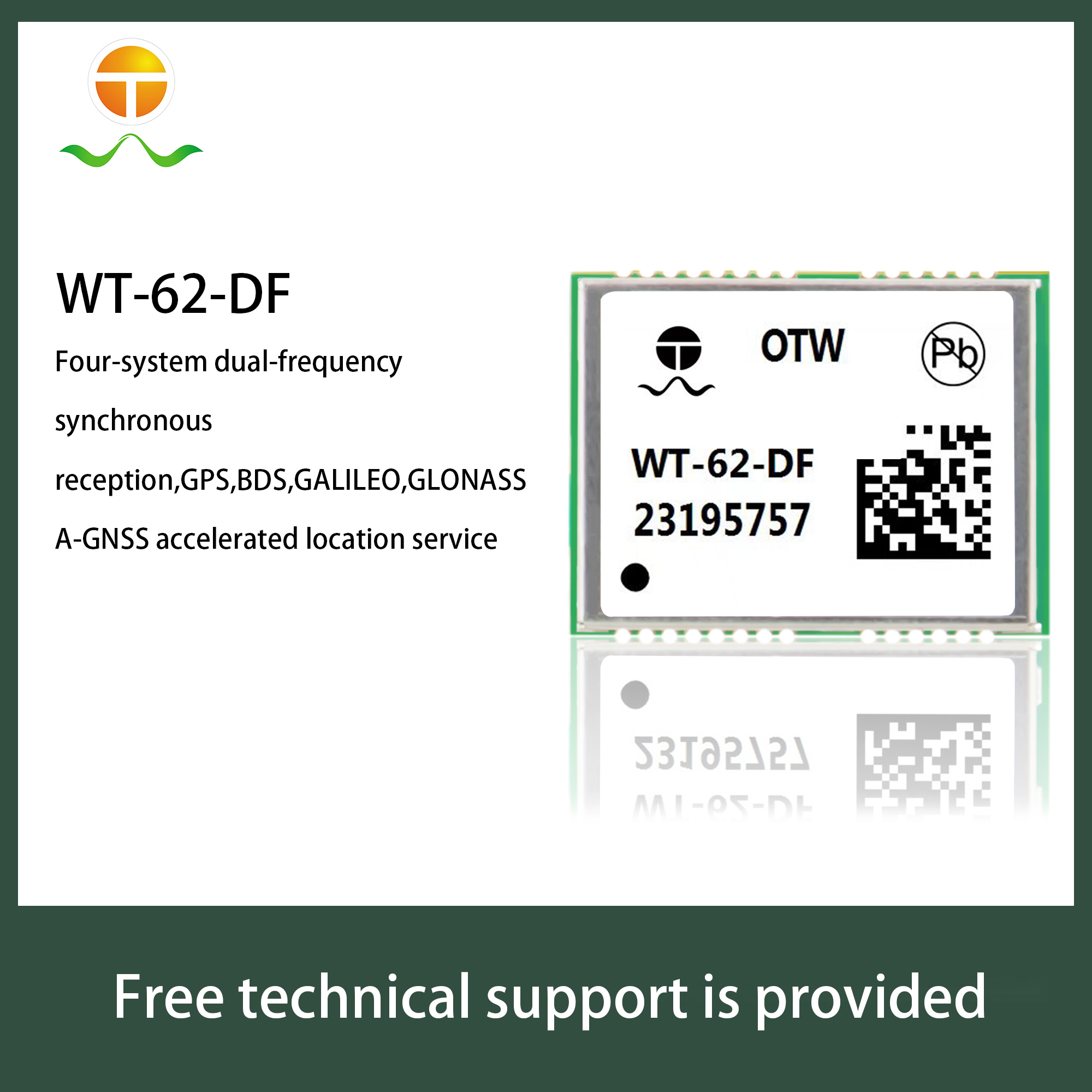
A reliable Positioning module helps IoT devices collect location data across different operating environments. Today, asset tracking, smart agriculture, and connected mobility require dependable positioning. Therefore, engineers increasingly consider dual-frequency GNSS technology. It receives signals across multiple satellite systems and frequency bands. In addition, compact hardware helps manufacturers integrate positioning into space-limited devices. The WT-62-DF combines these capabilities for commercial IoT applications.

Why Does IoT Tracking Need Dual-Frequency GNSS?
IoT devices often operate across changing outdoor environments. Buildings, trees, and moving equipment can affect satellite signal reception. Consequently, positioning performance depends on both signal availability and receiver design.
How Does Dual-Frequency Reception Help?
The WT-62-DF supports multiple satellite systems and frequency bands. It can synchronously receive GPS, BDS, Galileo, and GLONASS signals.
For example, GPS supports L1C/A and L5 reception. BDS supports B1I, B1C, and B2a. Galileo supports E1 and E5a, while GLONASS supports L1.
This multi-system design gives devices access to signals from different constellations. Moreover, dual-frequency reception provides additional measurement information. This can help positioning systems manage certain signal errors.
However, actual accuracy depends on antenna quality, satellite visibility, and environmental conditions. System integration also influences final performance.
Can a Small Positioning Module Support Compact IoT Devices?
Many connected products have limited internal installation space. For example, handheld terminals and wearable tracking devices need compact components. Therefore, module dimensions matter during hardware development.
How Does the WT-62-DF Support Space-Constrained Designs?
The WT-62-DF measures approximately twelve point two by sixteen by two point four millimeters. It uses a twenty-four-pin LCC package.
This compact structure supports integration into various embedded devices. Furthermore, its supply voltage ranges from one point eight to three point three volts.
The module offers UART, TTL, and RS232 interface options. It also supports NMEA-0183 or customized protocols. Consequently, developers can evaluate suitable communication configurations during product design.
For battery-powered applications, power consumption deserves careful consideration. The module lists running consumption at one hundred and three milliwatts. Its power-saving consumption is below twenty microwatts.
These specifications help engineers assess power budgets and operating modes. Nevertheless, total device consumption also depends on the host processor and communication components.
How Can Multi-System GNSS Support Different IoT Applications?
Different industries require different location data workflows. For instance, shared mobility needs regular position updates. Meanwhile, agricultural equipment may need location information during field operations.
Which Applications Can Use This GNSS Positioning Module?
The WT-62-DF supports intelligent IoT devices and shared two-wheel mobility. It also suits crowdsourced mapping and GIS data collection.
Additionally, developers can consider it for handheld terminals and displacement monitoring. Agricultural applications include lawn mowers and farming machinery. Drone developers may also evaluate the module for suitable positioning tasks.
For fleet management, GNSS data can support vehicle location monitoring. Similarly, personnel tracking devices can use positioning data for location services.
The module provides an update rate from zero point two five to ten hertz. Therefore, engineers can select an appropriate update frequency for their application.
However, high-dynamic applications require careful system evaluation. Antenna placement, motion conditions, and software filtering all influence results.
Explore our GNSS module product category to review positioning solutions for different device designs.

Can A-GNSS Improve the Location Acquisition Process?
Some IoT devices need to acquire satellite positioning after startup. In addition, devices may reconnect after entering areas with limited satellite visibility.
What Role Does Assisted GNSS Play?
The WT-62-DF supports A-GNSS accelerated location services. This technology can use assistance information to support satellite acquisition.
According to its product specifications, average cold-start time is twenty-eight seconds. Average hot-start time is approximately one second.
Actual acquisition times depend on assistance data, signal conditions, and device status. Even so, A-GNSS gives developers another option for improving positioning workflows.
What Should B2B Buyers Check Before Selecting a Positioning Module?
A suitable module should match the product’s positioning, power, and integration requirements. Therefore, buyers should evaluate more than satellite compatibility.
WT-62-DF Key Specifications
| Parameter | WT-62-DF Specification |
|---|---|
| Satellite systems | GPS, BDS, Galileo, GLONASS |
| Frequency support | Dual-frequency across supported systems |
| Channels | 128 |
| Horizontal accuracy | Less than two meters plus one part per million, CEP50 |
| Cold-start time | Average twenty-eight seconds |
| Hot-start time | Average one second |
| Update rate | Zero point two five to ten hertz |
| Interfaces | UART, TTL, RS232 |
| Protocol | NMEA-0183 or customized |
| Supply voltage | One point eight to three point three volts |
| Operating temperature | Minus forty to eighty-five degrees Celsius |
| Dimensions | Sixteen by twelve point two by two point four millimeters |
| Package | Twenty-four-pin LCC |
Before ordering, buyers should also confirm antenna matching and interface compatibility. Furthermore, they should discuss firmware requirements and integration testing with the supplier.
Read our GNSS technical guide for more information about module selection and positioning integration.
How Can Anzewei Support Your IoT Positioning Projects?
Anzewei focuses on wireless positioning and communication products. Its product range serves tracking, navigation, timing, and connected-device applications.
For B2B buyers, product consistency and integration support matter. A suitable supplier can help reduce development uncertainty. Moreover, clear technical communication supports more efficient project evaluation.
The WT-62-DF combines multi-constellation reception, dual-frequency support, and compact dimensions. It offers a practical option for various IoT positioning designs.
However, each project has different antenna, power, and accuracy requirements. Therefore, buyers should confirm application conditions before selecting a configuration.
Contact Anzewei to discuss wholesale purchasing, technical requirements, and your next GNSS positioning project.