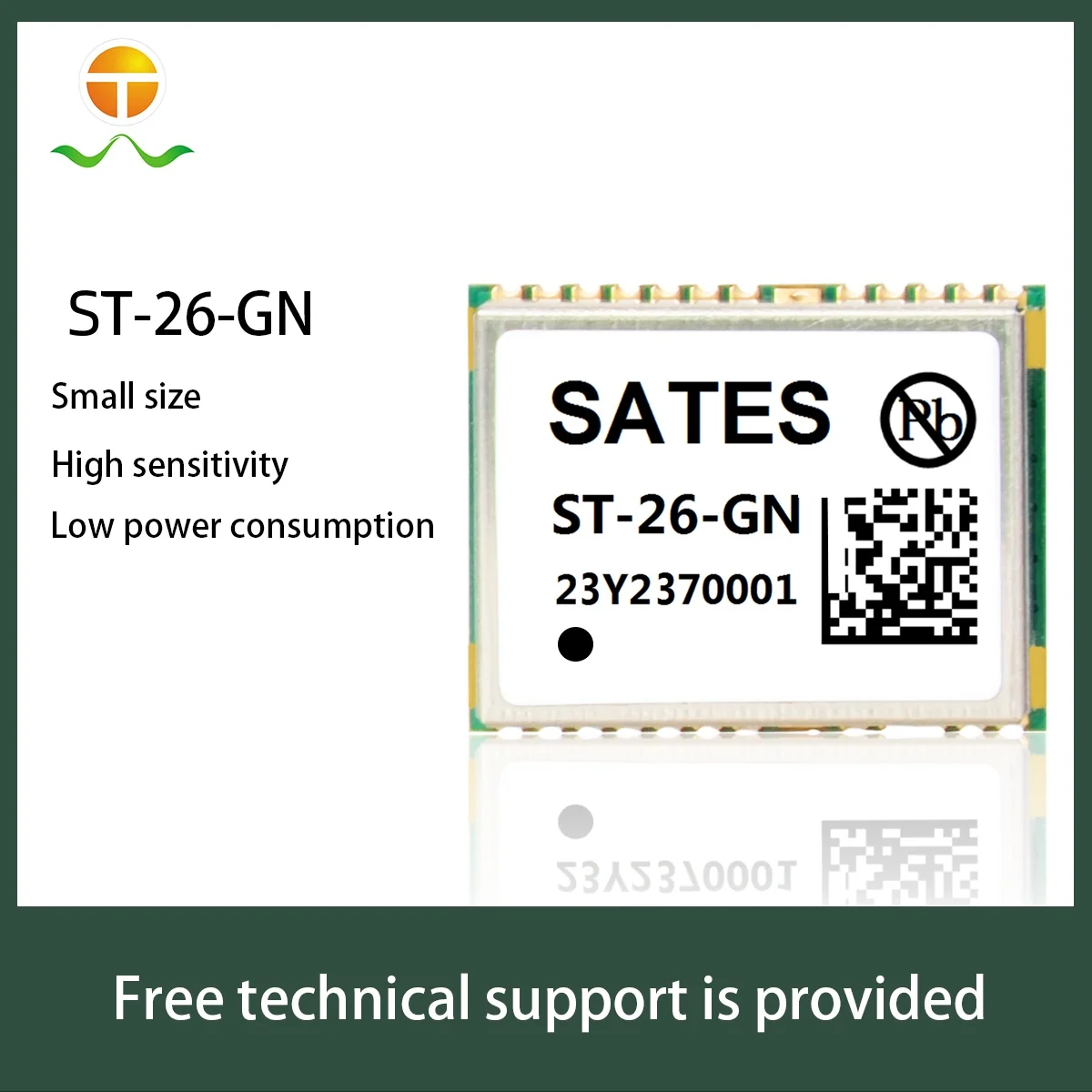
A GNSS tracking module helps connected devices collect accurate location data across changing environments. By receiving signals from multiple satellite systems, it supports reliable positioning for commercial applications. Moreover, high sensitivity and interference suppression help maintain useful reception conditions. For vehicle tracking, smart agriculture, and handheld equipment, the ST-26-GN offers a compact positioning solution. It also supports flexible integration for B2B manufacturers.
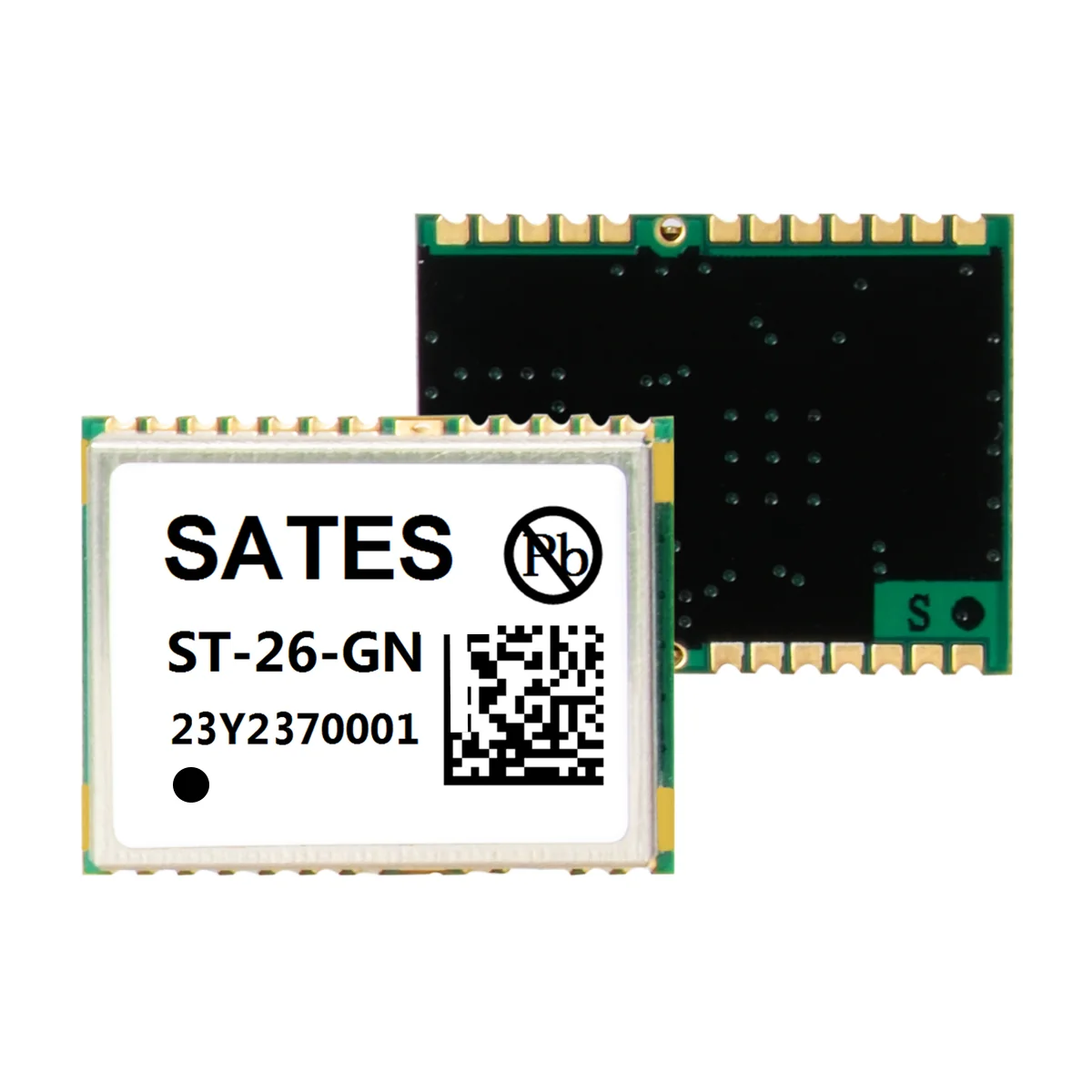
How Does a GNSS Tracking Module Improve Real-Time Positioning?
Imagine a delivery vehicle traveling through a busy city. Buildings, elevated roads, and nearby structures can influence satellite reception. Meanwhile, fleet managers still need regular location updates.
How Does Multi-GNSS Reception Help?
The ST-26-GN can receive signals from multiple satellite systems. These include GPS, QZSS, GLONASS, BeiDou, and Galileo.
Its receiver supports GPS and QZSS L1, GLONASS L1, BeiDou B1I, and Galileo E1. This multi-constellation capability gives devices access to signals from different satellite networks.
Furthermore, the module provides seventy-two channels. This architecture supports simultaneous satellite signal processing. Consequently, devices can use available satellite information more effectively.
The module specifies horizontal accuracy of two meters. However, actual results depend on antenna design, satellite visibility, and surrounding conditions.
Can a GNSS Tracking Module Maintain Reception in Challenging Environments?
Vehicles and agricultural machines often operate near buildings, trees, and equipment. These surroundings can introduce radio-frequency interference. Therefore, receiver sensitivity and interference management matter.
How Does RF Design Support Signal Reception?
The ST-26-GN uses RF construction and interference suppression technology. These features help manage challenging signal environments.
Its tracking sensitivity reaches minus one hundred and sixty-seven dBm. Cold-start sensitivity reaches minus one hundred and forty-eight dBm. Additionally, hot-start sensitivity reaches minus one hundred and fifty-seven dBm.
For example, an agricultural machine may work near trees and structures. Stable signal processing helps its control system collect positioning information. Nevertheless, antenna placement and installation quality remain important.
This design suits projects requiring consistent positioning workflows. It also gives manufacturers flexibility across different device environments.

How Quickly Can a GNSS Module Acquire Location Data?
Consider a handheld terminal starting its daily operation. The operator expects location information without unnecessary waiting. Therefore, acquisition time affects the user experience.
How Do Startup Performance and A-GNSS Help?
The ST-26-GN supports Assisted GNSS positioning. This function helps accelerate satellite acquisition through assistance information.
Its average cold-start time is twenty-six seconds. Meanwhile, its average hot-start time is approximately one second.
The module supports update rates from one to eighteen hertz. Thus, developers can select suitable update settings for different applications.
For example, vehicle monitoring may use regular position updates. Meanwhile, certain handheld applications may prioritize power management. The right configuration depends on movement speed and reporting needs.
Can One GNSS Module Support Different Commercial Devices?
B2B manufacturers often develop several products for different industries. However, each device has distinct space, interface, and power requirements.
How Does Compact Hardware Simplify Integration?
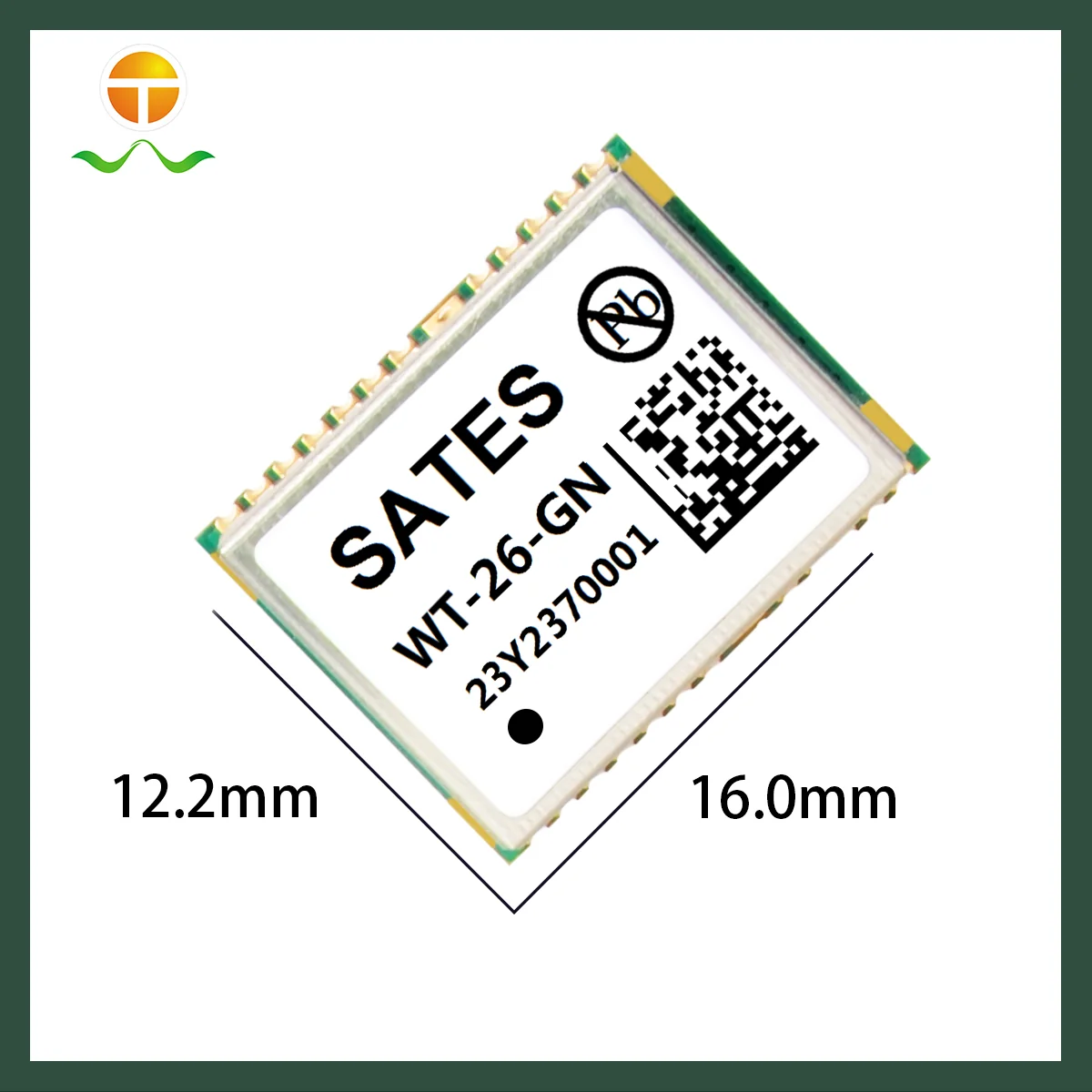
The ST-26-GN uses a twenty-four-pin LCC package. Its dimensions measure sixteen by twelve point two by two point four millimeters.
This compact design supports integration into space-limited equipment. Potential applications include vehicle terminals, handheld devices, agricultural machines, and drones.
The module supports UART and USB interfaces. Optional SPI and DDC interfaces provide additional integration choices.
Its supply voltage ranges from two point seven to three point six volts. Normal-mode current consumption is twenty-two milliamperes at three volts.
Moreover, developers can choose NMEA-0183 or customized protocols. This flexibility helps align communication settings with host systems.
Explore our GNSS module product category for additional positioning solutions.
What Should B2B Buyers Check Before Purchasing?
A suitable module should match the complete device design. Therefore, buyers should review positioning performance, interfaces, power, and environmental requirements.
ST-26-GN Key Specification Overview
| Parameter | ST-26-GN Specification |
|---|---|
| Satellite systems | GPS, QZSS, GLONASS, BeiDou, Galileo |
| Frequency bands | L1, B1I, E1 |
| Receiver channels | Seventy-two |
| Horizontal accuracy | Two meters |
| Tracking sensitivity | Minus one hundred and sixty-seven dBm |
| Cold-start time | Average twenty-six seconds |
| Hot-start time | Average one second |
| Update rate | One to eighteen hertz |
| Interfaces | UART, USB, optional SPI, DDC |
| Supply voltage | Two point seven to three point six volts |
| Operating temperature | Minus forty to eighty-five degrees Celsius |
| Package | Twenty-four-pin LCC |
| Dimensions | Sixteen by twelve point two by two point four millimeters |
The product page also lists a zero PPM plan. Buyers should confirm its implementation details for their specific project.
Before ordering, manufacturers should evaluate antenna matching and firmware compatibility. Additionally, they should discuss interface requirements and production testing.
Read our GNSS technical guide for practical integration considerations.
How Can Anzewei Support Your GNSS Projects?
Anzewei focuses on wireless positioning and communication solutions. Its products serve vehicle tracking, navigation, agriculture, and connected devices.
For B2B buyers, product consistency and technical communication are essential. Anzewei supports project discussions around application requirements and product selection.
The ST-26-GN combines multi-GNSS reception, compact packaging, and flexible interfaces. Its balanced design supports various commercial positioning applications.
Furthermore, suitable integration can help manufacturers manage development costs. Buyers can discuss wholesale requirements and customization options with the supplier.
Contact Anzewei to explore the ST-26-GN for your next tracking project.