A Pet GPS Tracker Module provides positioning data for devices that help owners locate their pets. During daily walks, pets may wander through parks, residential streets, and open fields. Meanwhile, trees and buildings can obstruct satellite signals. Therefore, manufacturers need positioning modules that support reliable reception under varying conditions.
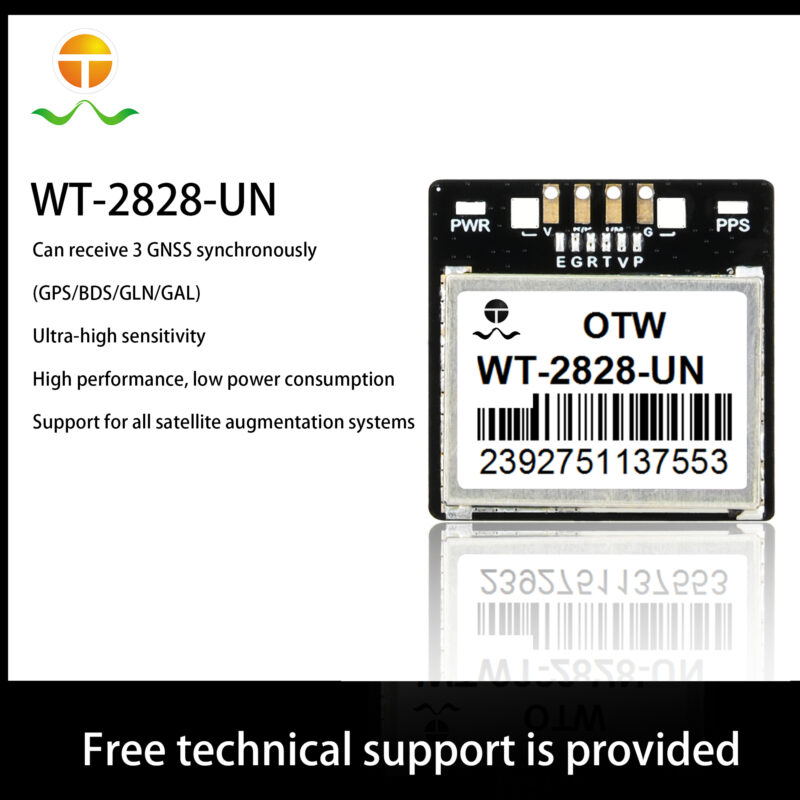
The WT-2828-UN integrates a GNSS receiver and antenna. Additionally, it supports multiple satellite systems and includes a high-gain low-noise amplifier. These features help the host device obtain positioning data in challenging environments. When integrated into a complete pet tracker, the module can help owners check their pets’ reported locations.
Explore our GNSS module product categories for positioning components used in tracking and navigation equipment.

How Can a Pet GPS Tracker Module Support Outdoor Pet Tracking?
Pets can wander beyond their owners’ immediate view during walks. In wooded parks, dense foliage may obstruct satellite signals. Consequently, the tracking device may experience fluctuating coordinates or longer positioning acquisition times.
The WT-2828-UN supports simultaneous reception from three GNSS constellations. Its supported systems include GPS/QZSS, GLONASS, BeiDou, and Galileo. This capability gives the host device access to multiple satellite systems.
Additionally, its tracking sensitivity reaches minus 167 dBm. The built-in high-gain low-noise amplifier supports reception of weak satellite signals. Therefore, manufacturers can evaluate the module for pet trackers operating in demanding outdoor environments.
How Can a Pet GPS Tracker Module Support Positioning Near Buildings?
Residential buildings can obstruct satellite signals when pets move through narrow streets or courtyards. Furthermore, reflected signals may introduce positioning errors. These conditions can affect the location data that a pet tracking device receives.
The WT-2828-UN combines its receiver and antenna in one assembly. Moreover, its surface acoustic wave filter helps manage unwanted radio-frequency signals. Together, these features support receiver integration in compact tracking equipment.
However, antenna placement remains important. Engineers should evaluate the module inside the finished device to assess positioning performance under realistic conditions.

How Can the Module Help Owners Monitor Pet Locations?
A GNSS module supplies position data rather than providing a complete tracking experience. The host device processes these data and makes them available to tracking software. Meanwhile, communication hardware can transmit location information to a mobile application.
The WT-2828-UN supports NMEA-0183 or custom output protocols. This flexibility helps developers integrate positioning data into compatible tracking systems. Consequently, a properly designed pet tracker can display reported locations and record movement history.
However, map displays, remote access, and geofence alerts depend on the host device and its software. These functions do not come from the positioning module alone.
How Can the WT-2828-UN Support Compact Tracker Designs?
Space and energy consumption matter when manufacturers develop portable tracking equipment. Therefore, integrating the receiver and antenna can simplify hardware planning.
The WT-2828-UN supports update rates from 1 to 18 hertz. Its specified power consumption is 35 milliamperes at 3.3 volts. Additionally, its operating voltage ranges from 3 to 5 volts.
These specifications give developers useful design options. However, the complete device’s battery life also depends on communication activity, processor usage, and firmware configuration. Engineers should validate total power consumption before production.
Read our GNSS technical guide for more information about positioning module integration and receiver design.

WT-2828-UN Specifications for Pet Tracking Equipment
The following table summarizes key published specifications. Manufacturers should confirm the exact interface and model variant before integration.
| Parameter | WT-2828-UN Specification |
| Supported GNSS systems | GPS/QZSS, GLONASS, BeiDou, Galileo |
| Simultaneous reception | Three GNSS constellations |
| Receiver channels | 72 |
| Tracking sensitivity | −167 dBm |
| Acquisition sensitivity | −160 dBm |
| Horizontal positioning accuracy | 2.0 meters |
| Update rate | 1 to 18 hertz |
| Average cold-start time | 26 seconds |
| Average hot-start time | 1 second |
| Output protocol | NMEA-0183 or custom protocol |
| Operating voltage | 3 to 5 volts |
| Power consumption | 35 milliamperes at 3.3 volts |
| Operating temperature | −40 to +105 degrees Celsius |
For detailed product information, visit the WT-2828-UN product page.
Q&A: Integrating the WT-2828-UN into Pet Tracking Devices
Q1: Does the WT-2828-UN locate pets independently?
No. The WT-2828-UN is a positioning module for integration into compatible equipment. It provides GNSS data that a host device can process. Additional hardware and software enable location displays and tracking functions.
Q2: How can the WT-2828-UN benefit a pet tracker?
Its multi-GNSS reception, high-sensitivity receiver, and integrated antenna support positioning-system development. These features can help the host device obtain useful location data when satellite signals remain available. Actual results depend on installation and surrounding conditions.
Q3: Can manufacturers use the module to develop different tracking products?
Yes. Its supported output protocols and adjustable update rate provide integration options for compatible devices. Manufacturers should confirm interface requirements, power consumption, and antenna placement. They should also validate the complete tracking system before production.