มีความน่าเชื่อถือ โมดูล RTK helps GNSS equipment maintain accurate positioning. อย่างไรก็ตาม, การมองเห็นดาวเทียม, สัญญาณรบกวน, and atmospheric delays can affect positioning results. Multi-constellation GNSS technology addresses these challenges through broader satellite access and multi-frequency signal processing.
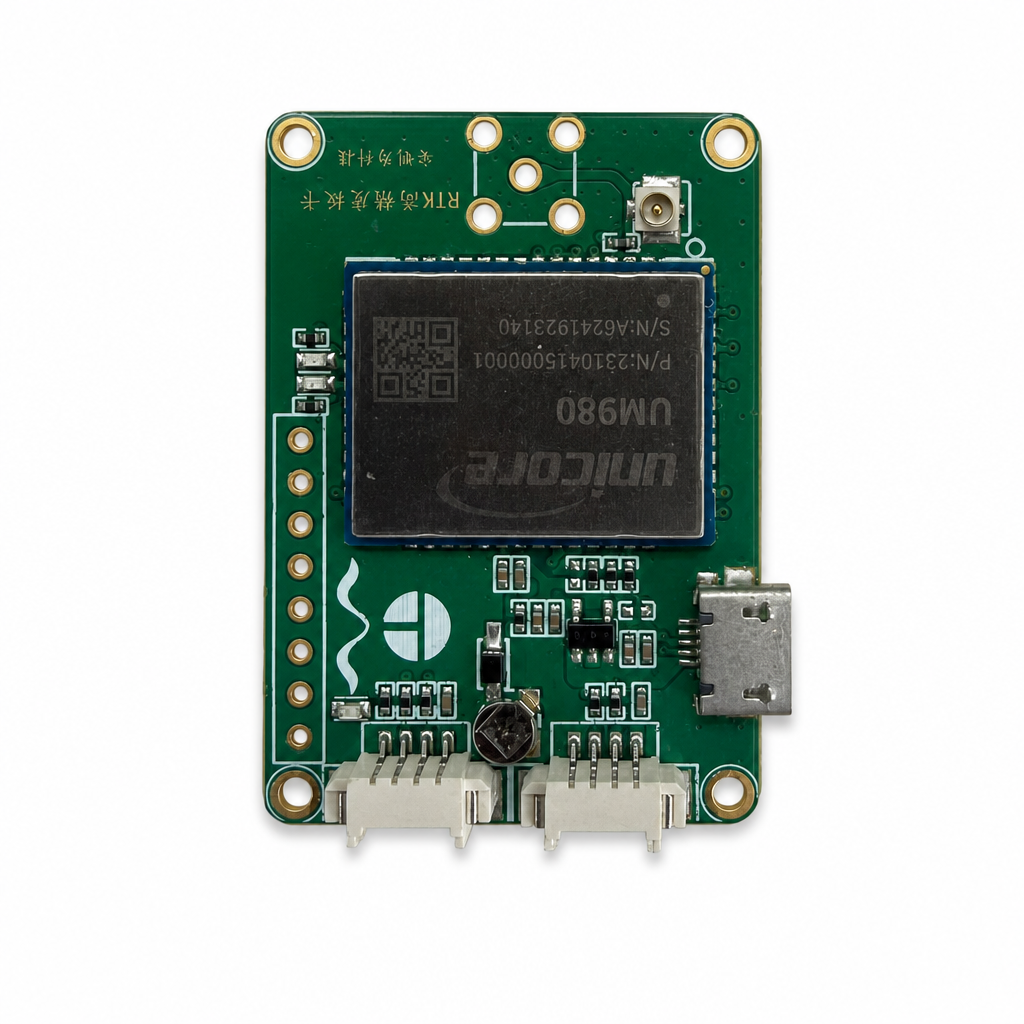
For equipment manufacturers, positioning reliability directly affects product performance. ดังนั้น, selecting a suitable module requires attention to signal tracking, RTK accuracy, and integration capabilities. The WT-4330-UM980 combines full-constellation tracking with advanced positioning algorithms for professional GNSS applications.
How Does Multi-Constellation Tracking Improve Satellite Availability?
อาคาร, ต้นไม้, and terrain can obstruct satellite signals. เพราะเหตุนี้, GNSS receivers may have fewer usable observations. This can affect positioning continuity, especially in urban areas and complex outdoor environments.
ก multi-constellation RTK module accesses GPS, กลอส, ประเทศกาลิเลโอ, และเป่ยโต่ว. By tracking multiple satellite systems simultaneously, it expands available observations and provides more flexibility for positioning calculations.
The WT-4330-UM980 supports full-constellation, multi-frequency tracking. This helps maintain satellite availability for surveying, เกษตรกรรมที่แม่นยำ, and autonomous navigation. อย่างไรก็ตาม, actual performance still depends on satellite geometry and antenna installation.
Beyond broad satellite access, the WT-4330-UM980 is powered by Unicore’s NebulasIV SoC, providing a high-performance and reliable single-antenna RTK solution. Its advanced architecture combines precise GNSS observation processing with efficient positioning algorithms, helping equipment manufacturers achieve stable positioning performance across demanding applications.
Can Multi-Frequency RTK Processing Deliver Centimeter-Level Positioning?
Atmospheric delays and multipath reflections can influence GNSS measurements. Multi-frequency tracking provides additional carrier-phase observations. These measurements help receivers estimate ionospheric delays and improve ambiguity resolution.
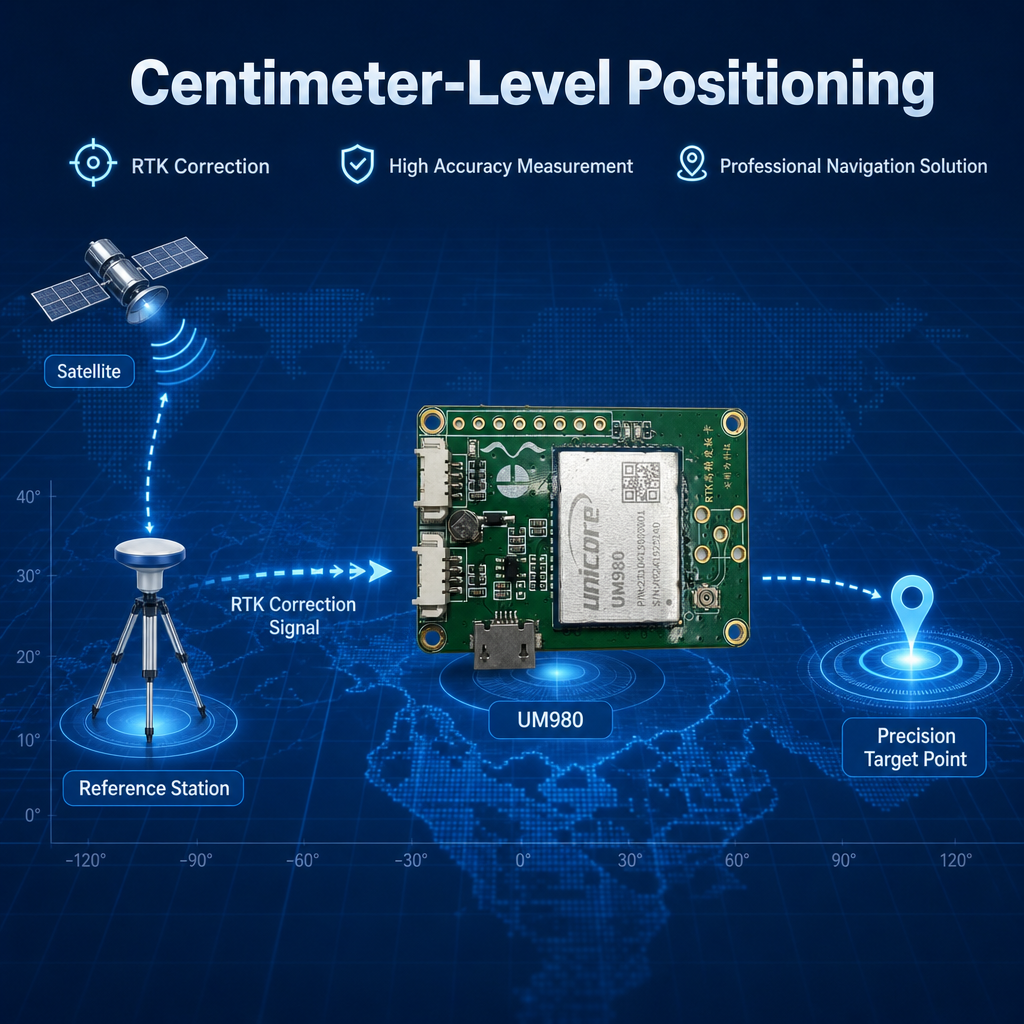
The WT-4330-UM980 integrates a high-precision RTK engine. It processes multi-frequency carrier-phase observations and supports centimeter-level positioning under suitable conditions. Its advanced ambiguity resolution technology also supports fast RTK initialization.
For surveying and precision agriculture, these capabilities support accurate positioning operations. อย่างไรก็ตาม, actual results depend on correction data, baseline length, satellite geometry, and antenna quality.
How Does an RTK Module Handle Signal Interference?
Industrial equipment and communication systems can generate electromagnetic interference. These signals may affect GNSS acquisition and tracking. ดังนั้น, interference mitigation is an important consideration for professional positioning equipment.
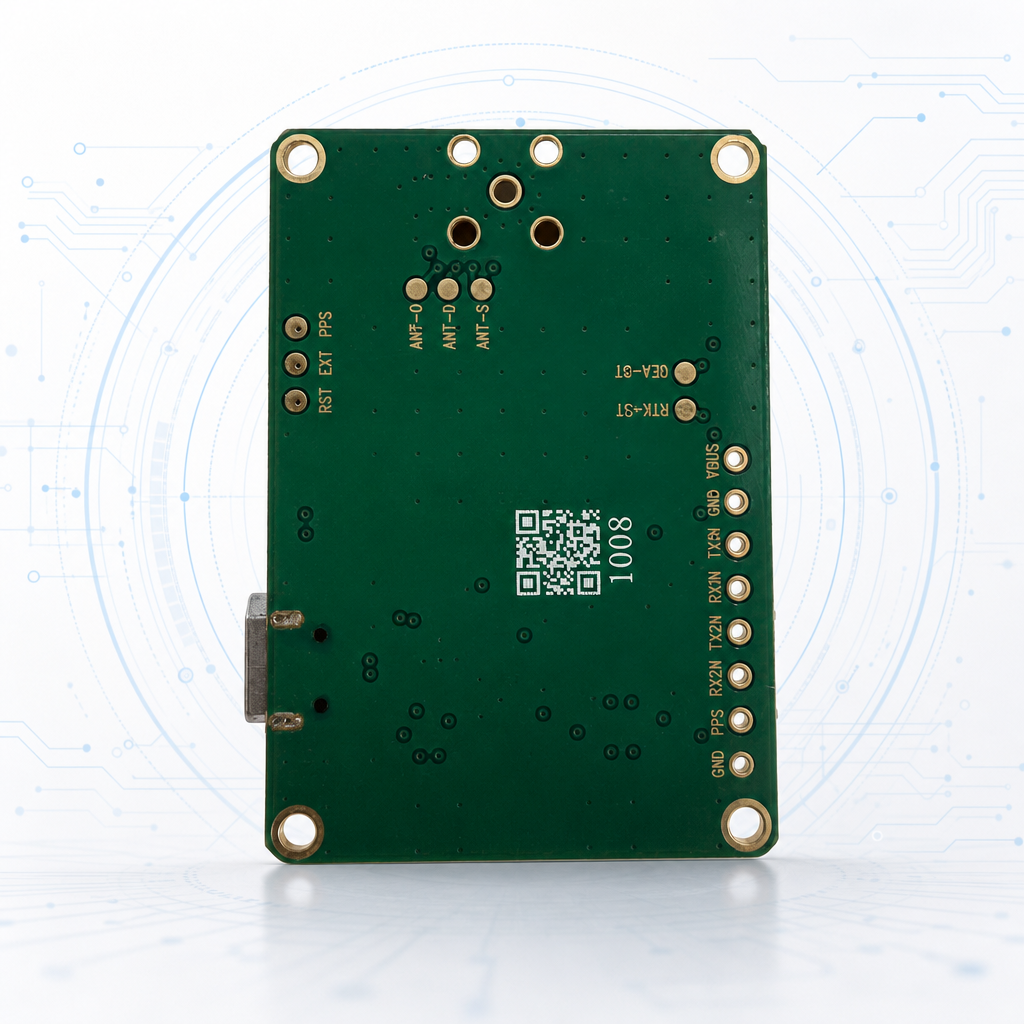
ที่ WT-4330-UM980 integrates multi-frequency interference detection and narrowband anti-jamming technologies. These functions help maintain signal integrity. Its integrated RF, baseband, and positioning architecture also supports efficient signal processing.
In addition to its interference mitigation capabilities, the WT-4330-UM980 features an optimized single-antenna positioning architecture. Its integrated RF and baseband design helps improve processing efficiency while reducing system integration complexity. This combination of positioning performance and interference protection makes it a practical choice for GNSS equipment operating in demanding electromagnetic environments.
สำหรับผู้ผลิต, these capabilities provide additional system design flexibility. อย่างไรก็ตาม, antenna selection, RF layout, grounding, and shielding remain important. Combining suitable hardware design with interference mitigation helps improve overall positioning robustness.
Welcome to explore our คำแนะนำทางเทคนิคของ GNSS for product selection and integration insights.
Why Choose the WT-4330-UM980 for B2B GNSS Projects?
B2B buyers consider more than positioning accuracy. Product quality, integration efficiency, technical support, and procurement costs also influence purchasing decisions. A suitable RTK module should meet application requirements while supporting stable product development.
The WT-4330-UM980 supports RTK positioning, standalone high-precision positioning, Precise Point Positioning (PPP), and heading determination. These functions provide flexibility for different GNSS terminal designs. Its integrated architecture also helps simplify system-level development.
Another important advantage is its high positioning data update rate of up to 50 Hz. This enables the module to track rapidly changing movement more smoothly, making it suitable for dynamic applications such as UAV navigation, mobile surveying, and autonomous equipment. For manufacturers developing high-performance GNSS terminals, the combination of fast initialization, centimeter-level accuracy, and high-frequency output provides greater flexibility in application development.
For OEM and ODM manufacturers, combining reliable performance with reasonable procurement costs matters. The WT-4330-UM980 offers multiple positioning functions for surveying, เกษตรกรรมที่แม่นยำ, and autonomous navigation equipment. Buyers can evaluate its specifications against their project requirements.
WT-4330-UM980 Technical Feature Overview
| Technical Item | WT-4330-UM980 Capability |
| GNSS Tracking | Full-constellation |
| Signal Processing | Multi-frequency |
| RTK Engine | Integrated high-precision RTK |
| ความแม่นยำของตำแหน่ง | Centimeter-level RTK |
| Initialization | Advanced ambiguity resolution |
| การป้องกันการรบกวน | Detection and narrowband anti-jamming |
| Heading | รองรับ |
| Standalone Positioning | High-precision |
| PPP | รองรับ |
| Architecture | Integrated RF and baseband |
บันทึก: Actual positioning performance depends on satellite visibility, correction data, antenna configuration, และสภาพการทำงาน.
Explore Our GNSS Solutions
The WT-4330-UM980 combines multi-constellation tracking, high-precision RTK processing, and interference mitigation. It provides practical integration value for professional GNSS equipment manufacturers.
Welcome to explore our GNSS Product Category for more positioning modules and hardware solutions.
ถาม&ก: Multi-Constellation GNSS and RTK Modules
ไตรมาสที่ 1: What is a multi-constellation RTK module?
It receives signals from multiple satellite systems, รวมทั้งจีพีเอสด้วย, กลอส, ประเทศกาลิเลโอ, และเป่ยโต่ว. These observations support high-precision positioning calculations.
ไตรมาสที่ 2: Can the WT-4330-UM980 achieve centimeter-level accuracy?
ใช่. Its integrated RTK engine processes multi-frequency carrier-phase observations. It supports centimeter-level positioning under suitable operating conditions.
ไตรมาสที่ 3: Why is multi-frequency tracking important?
It provides additional carrier-phase observations. These help estimate atmospheric delays and resolve carrier-phase ambiguities.
ไตรมาสที่ 4: Does the WT-4330-UM980 support heading determination?
ใช่. It supports heading, standalone high-precision positioning, and PPP for different GNSS applications.
Q5: Is this RTK module suitable for OEM projects?
ใช่. Its integrated architecture and multiple positioning functions support professional GNSS terminal development. Manufacturers can evaluate its specifications for their specific equipment requirements.