Le développement de technologies portables pour les animaux ou les humains présente des obstacles techniques uniques. Engineers must balance precise location tracking with extremely limited battery capacity. Par conséquent, the choice between a low power GPS dev board for collars and standard modules is vital.
Standard GPS modules often drain power too quickly for long-term use. Cependant, specialized development boards offer integrated power management systems. This article explores the critical differences between these two options. We will help you choose the right hardware for your next wearable project. Let us dive into the technical world of low-power positioning!
What is a Low Power GPS Dev Board for Collars?
A low power GPS dev board for collars is an all-in-one solution for developers. These boards specifically target wildlife tracking and domestic pet wearables. Unlike raw modules, they include vital secondary components on a single circuit.
Integrated Power Management
These boards feature specialized chips to control energy flow. They allow the system to enter “deep sleep” modes when the tracker is stationary. En outre, they optimize the voltage conversion to prevent energy waste. This integration is crucial for devices that must last for months in the field.
Onboard Sensors and Connectivity
Most dev boards include motion sensors like accelerometers. These sensors tell the GPS to wake up only when the animal moves. En plus, they often support LoRa or cellular connectivity. This combination makes them much easier to deploy than building from scratch.
Understanding Standard GPS Modules
Standard GPS modules are the “raw” components used in general electronics. You often find them in car navigation systems or handheld outdoor devices. While they are powerful, ils nécessitent des circuits de support importants pour fonctionner efficacement.
Hautes performances, Forte demande
Les modules standards se concentrent sur la rapidité “Il est temps de procéder à la première réparation” (TTFF) et une grande précision. Cependant, ils y parviennent en gardant le récepteur actif en permanence. Ce comportement entraîne une décharge massive de la batterie en quelques heures. Donc, vous devez concevoir un système de contrôle externe complexe pour gérer leur puissance.
Flexibilité pour la personnalisation
Le principal avantage d’un module standard est sa polyvalence. Vous pouvez le coupler avec n'importe quel microcontrôleur de votre choix. Cependant, cette flexibilité augmente la taille de votre PCBA final. Pour les trackers portables compacts, cet encombrement supplémentaire devient souvent un inconvénient majeur.
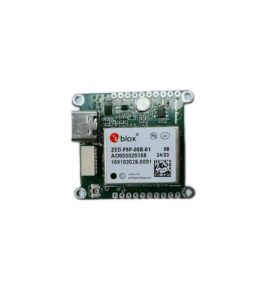
Comparaison de l'efficacité énergétique: La bataille de base
La durée de vie de la batterie détermine le succès de tout tracker portable. Let us analyze how a low power GPS dev board for collars outperforms standard options.
-
Current Consumption: Standard modules often pull $30$–$50$ $mA$ during active tracking. Specialized boards can drop this significantly below $10$ $mA$ in power-saving modes.
-
Sleep Current: A dev board optimized for collars has a sleep current in the microamp ($\mu A$) range. Standard modules might still leak significant power unless you cut their supply entirely.
-
Intelligent Duty Cycling: Dev boards handle the “wake-up” logic internally. This reduces the processing load on your main MCU.
Key Differences for Wearable Tracker Applications
To make an informed choice, you must look at your specific project requirements. Here is a breakdown of how these technologies differ in the real world.
1. Size and Weight Constraints
Wearables must be light and comfortable for the user. A low power GPS dev board for collars is usually very compact. Designers prioritize a small footprint to fit inside sleek collar housings. Standard modules require extra boards for power and communication, making the final device much larger.
2. Ease of Development
Building a tracker from a standard module takes months of engineering. You must write code for power management and signal processing. Inversement, a dev board comes with pre-written libraries and examples. Cela vous permet de lancer vos kits de développement GPS portables beaucoup plus rapidement..
3. Fiabilité sur le terrain
Le suivi de la faune ou des animaux de compagnie implique des conditions extérieures difficiles. Les cartes de développement sont souvent construites avec des composants robustes. Ils gèrent mieux les fluctuations de température et les vibrations que les modules génériques pour amateurs.. Cette fiabilité garantit que vous ne perdez pas vos données lors d’une mission de recherche critique.
Quand choisir un module GPS standard
Les modules standards ont toujours leur place sur le marché industriel. Vous devriez les considérer si votre projet répond à ces critères spécifiques:
-
Source d'alimentation continue: Utiliser des modules standards si l'appareil se connecte à une batterie de véhicule.
-
Production à grande échelle: Si vous fabriquez $10,000$ unités, un module brut pourrait être moins cher. Cependant, vous aurez besoin d'un R initial massif&Budget D.
-
Extrêmement haute précision: If you need centimeter-level accuracy (RTK), standard high-end modules are better.
The Advantages of Using a Dev Board for Wildlife Research
Research projects often involve tracking animals in remote mountains or forests. In these cases, a GPS tracker for wildlife research must be “set and forget.”
Long-Term Data Collection
A specialized board can manage its own energy for a full year. It records locations at specific intervals to save power. En outre, many boards support solar charging inputs. This allows the tracker to run indefinitely without human intervention.
Reduced Failure Points
Integrated boards have fewer physical connections between components. Fewer wires and solder joints mean less chance of failure in the wild. This durability is why professional researchers always choose integrated dev boards over modular setups.
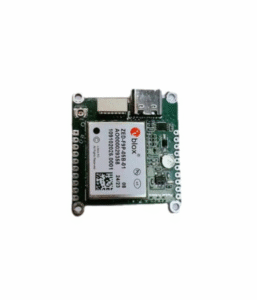
Technical Comparison Table
| Fonctionnalité | Low Power GPS Dev Board | Standard GPS Module |
| Gestion de l'énergie | Integrated (Hardware level) | External (Requires custom design) |
| Active Power | Very Low (<10 mA) | Modéré (30–50 mA) |
| Onboard Sensors | Usually includes Accelerometer | Aucun |
| Development Time | Short (Weeks) | Long (Months) |
| Best Application | Pet Collars, Wildlife Tags | Car Trackers, Handheld NAV |
Future Trends in Wearable GPS Technology
The industry is moving toward “Ultra-Low Power” (ULP) designs. We now see chips that use AI to predict satellite positions. This technology further reduces the time the GPS needs to stay active.
Choosing a low power GPS dev board for collars keeps you at the cutting edge. These boards often receive firmware updates that improve efficiency over time. This future-proofing is essential for long-term deployments in the field.
Making the Right Hardware Choice
The battle between dev boards and standard modules comes down to efficiency. For wearable trackers, a low power GPS dev board for collars is clearly superior. It offers integrated power management, a smaller size, and faster development cycles.
Standard modules work well for vehicles but fail in the world of wearables. If you want to build a reliable, long-lasting tracker, start with a professional dev board. This choice ensures your project stays powered and your data stays accurate!