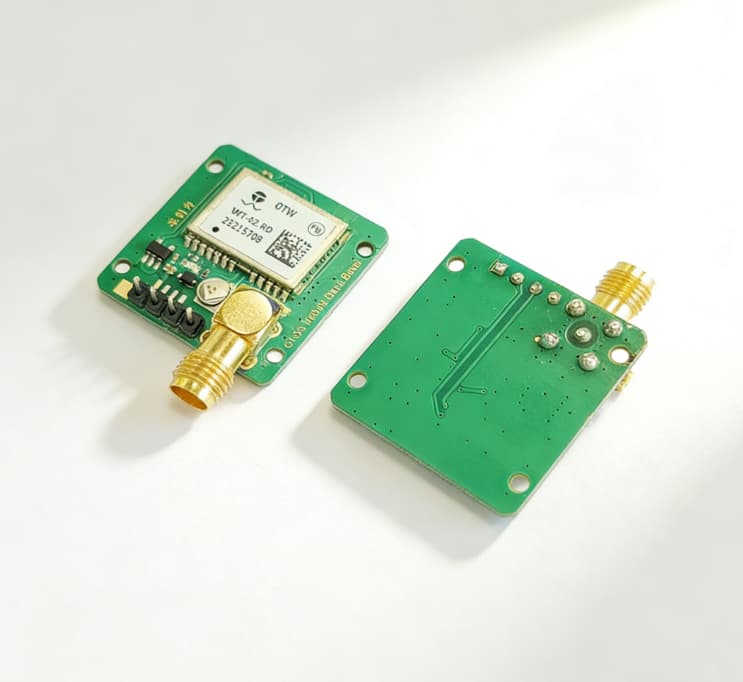
Les systèmes autonomes modernes exigent aujourd’hui une précision extrême. Les modules GPS standards échouent souvent désormais dans les profonds canyons urbains. Vous êtes probablement confronté quotidiennement à des dérives de signal et à des erreurs de positionnement.. Cependant, même de petites erreurs peuvent ruiner un projet entier. Des données inexactes entraînent des collisions et des défaillances systémiques. Vous avez besoin de plus qu'une simple puce de navigation de base. Pour réussir, vous avez besoin d'un module GNSS RTK industriel robuste. Les modules hautes performances offrent la stabilité dont vos robots ont besoin. Découvrez les spécifications critiques qui définissent un module de premier plan. Votre voyage vers une précision centimétrique commence ici. Explorons maintenant le monde du GNSS de haute précision.
La puissance du support multibande et multiconstellation
Un module GNSS RTK industriel professionnel offre une fiabilité inégalée. Spécifiquement, il suit plusieurs constellations de satellites à la fois. Il utilise le GPS, Glonass, Galileo, et BeiDou simultanément. Cette diversité garantit une correction du signal dans les zones bloquées. En outre, les unités hautes performances utilisent une conception de récepteur RTK GNSS multibande. Ils traquent la L1, Fréquences L2 ensemble. Par conséquent, le module corrige les erreurs atmosphériques beaucoup plus rapidement. La fiabilité des levés dépend de ces couches de signaux avancées. Chaque fréquence ajoute une couche de sécurité pour vos drones. La technologie moderne fait de la précision centimétrique une réalité pour tous.
L'avantage de la technologie des modules de positionnement au niveau centimétrique
Pourquoi un module de positionnement au niveau centimétrique est-il essentiel pour 2026? Spécifiquement, cela réduit la marge d'erreur à moins de deux centimètres. Cette précision est vitale pour l’agriculture autonome et la cartographie. Donc, les tracteurs peuvent planter des graines avec une incroyable précision robotique. En outre, ces modules utilisent le protocole NTRIP pour les corrections. Par conséquent, vous recevez des mises à jour en temps réel via les stations de base locales. La plupart des ingénieurs trouvent ce niveau de détail absolument transformateur.
Vitesse et taux de correction: Le moment de la première réparation (TTFF)
La vitesse définit l'efficacité d'un système GNSS haute performance. Spécifiquement, recherchez des modules avec un TTFF très faible. Tu veux un “Démarrage à chaud” réparer en moins d'une seconde. Donc, votre système est prêt à fonctionner immédiatement. En outre, un taux de mise à jour élevé de 20 Hz est idéal. Par conséquent, le module suit les objets en mouvement rapide en toute simplicité. Les données à grande vitesse garantissent que votre navigation reste fluide et réactive.

Obtenez une fiabilité inégalée dans chaque mission
Imaginez une flotte de drones qui ne se perd jamais. Vous voulez un système qui défie les interférences de signal. L'utilisation d'un module GNSS RTK industriel rend cela possible. Vous ne vous souciez plus des dérives ou des accidents coûteux. Plutôt, vous bénéficiez d'une trajectoire de vol stable et prévisible. Vivez la fierté professionnelle d’un système parfaitement calibré. Vos clients feront davantage confiance à vos solutions autonomes. Un meilleur matériel entraîne des risques opérationnels bien inférieurs. Premium modules turn a standard robot into a leader. You deserve the best precision that 2026 tech provides. Reach new levels of accuracy with industrial-grade GNSS modules.
Standard GNSS vs. High-Performance Industrial RTK
| Fonctionnalité | Module GNSS standard | Module RTK GNSS industriel |
| Précision | 2.5 Mètres (Moyenne) | 1.0 Centimeter (Précision) |
| Bandes de signaux | Single Band (L1) | L1 L2 GNSS RTK Module |
| Constellations | 1 ou 2 Systems | All Major Systems (Global) |
| Power Use | Medium | Low Power Industrial GNSS Receiver |
The Critical Importance of Anti-Interference Tech
Industrial zones are often filled with electronic noise. Spécifiquement, high-end modules feature advanced anti-jamming hardware. They use Surface Acoustic Wave (SAW) filters for protection. Donc, the module ignores nearby radio and cellular signals. En outre, low-noise amplifiers (LNA) boost weak satellite data. Par conséquent, your Industrial RTK GNSS Module works in busy cities. Most maritime and mining projects require this robust shielding. It is the only way to ensure 24/7 uptime.
Améliorez votre navigation de précision dès aujourd'hui
Le 2026 le marché autonome exige les normes de précision les plus élevées. Ne vous contentez pas d'erreurs au niveau du compteur dans vos builds. Découvrez nos dernières Module GNSS collection maintenant. Nous proposons des modules spécifiques pour les drones et les voitures intelligentes. Notre boutique fournit des guides d'intégration complets et une assistance. En outre, nous proposons une option de récepteur GNSS industriel basse consommation. Améliorez votre positionnement et réduisez vos échecs de mission maintenant. Faites le premier pas vers une machine plus intelligente. Contactez nos experts GNSS pour une consultation technique dès aujourd'hui.
Prêt pour un succès centimétrique?
-
Parcourez les dernières conceptions de modules de positionnement au niveau centimétrique.
-
Renseignez-vous sur les spécifications du module L1 L2 GNSS RTK.
-
Commencez votre voyage vers la précision absolue ce soir.
Visitez notre officiel site pour parcourir notre galerie GNSS. Lisez les témoignages d'ingénieurs qui ont amélioré leurs flottes de drones. Trouvez l'équilibre parfait entre puissance et précision extrême. L'avenir de votre projet dépend de votre GNSS.
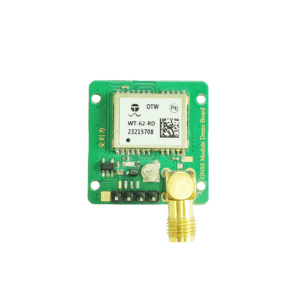
La précision est au cœur de l'automatisation
Dans 2026, nous valorisons l'intégrité des données avant tout. Un module GNSS RTK industriel de haute qualité est un outil essentiel. Il protège votre équipement et assure une mission réussie. Rendez votre navigation aussi nette que votre propre vision. Vos meilleurs résultats industriels commencent avec le bon module.
FAQ
1. Un module GNSS RTK industriel fonctionne-t-il dans les villes?
Oui, en particulier ceux avec support multi-bande L1/L2. Spécifiquement, ces bandes réduisent les erreurs de trajets multiples causées par les bâtiments. Vous obtenez une solution beaucoup plus stable dans les rues étroites. Par conséquent, ils sont parfaits pour les robots de livraison urbains.
2. Quelle quantité d'énergie un module haute performance utilise-t-il?
Les conceptions modernes se concentrent sur une efficacité extrême pour la durée de vie de la batterie. Spécifiquement, un récepteur GNSS industriel de faible puissance utilise moins de 100 mW. Cela permet de longues missions sur de petites batteries. Donc, vos appareils mobiles peuvent fonctionner pendant plusieurs jours.
3. Ai-je besoin d'une station de base pour que RTK fonctionne?
Oui, RTK nécessite des données de correction à partir d'un point connu. Spécifiquement, vous pouvez utiliser votre propre base ou un service NTRIP. Ces données permettent une précision centimétrique. Par conséquent, le module reste précis en corrigeant instantanément les erreurs des satellites.