Die Entwicklung tragbarer Technologie für Tiere oder Menschen stellt einzigartige technische Hürden dar. Engineers must balance precise location tracking with extremely limited battery capacity. Folglich, the choice between a low power GPS dev board for collars and standard modules is vital.
Standard GPS modules often drain power too quickly for long-term use. Jedoch, specialized development boards offer integrated power management systems. This article explores the critical differences between these two options. We will help you choose the right hardware for your next wearable project. Let us dive into the technical world of low-power positioning!
What is a Low Power GPS Dev Board for Collars?
A low power GPS dev board for collars is an all-in-one solution for developers. These boards specifically target wildlife tracking and domestic pet wearables. Unlike raw modules, they include vital secondary components on a single circuit.
Integrated Power Management
These boards feature specialized chips to control energy flow. They allow the system to enter “deep sleep” modes when the tracker is stationary. Außerdem, they optimize the voltage conversion to prevent energy waste. This integration is crucial for devices that must last for months in the field.
Onboard Sensors and Connectivity
Most dev boards include motion sensors like accelerometers. These sensors tell the GPS to wake up only when the animal moves. Zusätzlich, they often support LoRa or cellular connectivity. This combination makes them much easier to deploy than building from scratch.
Understanding Standard GPS Modules
Standard GPS modules are the “raw” components used in general electronics. You often find them in car navigation systems or handheld outdoor devices. While they are powerful, they require significant support circuitry to function efficiently.
High Performance, High Demand
Standard modules focus on fast “Time to First Fix” (TTFF) and high accuracy. Jedoch, they achieve this by keeping the receiver active constantly. This behavior leads to massive battery drain within hours. daher, you must design a complex external control system to manage their power.
Flexibility for Customization
The main benefit of a standard module is its versatility. You can pair it with any microcontroller of your choice. Jedoch, this flexibility increases the size of your final PCBA. For compact wearable trackers, this extra bulk often becomes a major disadvantage.
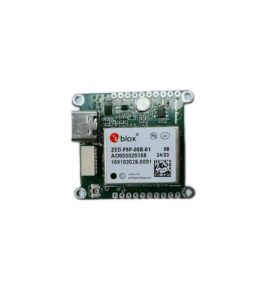
Comparing Energy Efficiency: The Core Battle
Battery life determines the success of any wearable tracker. Let us analyze how a low power GPS dev board for collars outperforms standard options.
-
Current Consumption: Standard modules often pull $30$–$50$ $mA$ during active tracking. Specialized boards can drop this significantly below $10$ $mA$ in power-saving modes.
-
Sleep Current: A dev board optimized for collars has a sleep current in the microamp ($\mu A$) range. Standard modules might still leak significant power unless you cut their supply entirely.
-
Intelligent Duty Cycling: Dev boards handle the “wake-up” logic internally. This reduces the processing load on your main MCU.
Key Differences for Wearable Tracker Applications
To make an informed choice, you must look at your specific project requirements. Here is a breakdown of how these technologies differ in the real world.
1. Size and Weight Constraints
Wearables must be light and comfortable for the user. A low power GPS dev board for collars is usually very compact. Designers prioritize a small footprint to fit inside sleek collar housings. Standard modules require extra boards for power and communication, making the final device much larger.
2. Ease of Development
Building a tracker from a standard module takes months of engineering. You must write code for power management and signal processing. Umgekehrt, a dev board comes with pre-written libraries and examples. This allows you to launch your wearable GPS development kits much faster.
3. Reliability in the Field
Tracking wildlife or pets involves harsh outdoor conditions. Dev boards are often built with ruggedized components. They handle temperature fluctuations and vibrations better than generic hobbyist modules. This reliability ensures you don’t lose your data during a critical research mission.
When to Choose a Standard GPS Module
Standard modules still have their place in the industrial market. You should consider them if your project fits these specific criteria:
-
Continuous Power Source: Use standard modules if the device connects to a vehicle battery.
-
Large-Scale Production: If you manufacture $10,000$ units, a raw module might be cheaper. Jedoch, you will need a massive initial R&D budget.
-
Extremely High Precision: If you need centimeter-level accuracy (RTK), standard high-end modules are better.
The Advantages of Using a Dev Board for Wildlife Research
Research projects often involve tracking animals in remote mountains or forests. In these cases, a GPS tracker for wildlife research must be “set and forget.”
Long-Term Data Collection
A specialized board can manage its own energy for a full year. It records locations at specific intervals to save power. Außerdem, many boards support solar charging inputs. This allows the tracker to run indefinitely without human intervention.
Reduced Failure Points
Integrated boards have fewer physical connections between components. Fewer wires and solder joints mean less chance of failure in the wild. This durability is why professional researchers always choose integrated dev boards over modular setups.
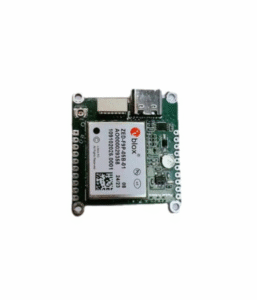
Technical Comparison Table
| Besonderheit | Low Power GPS Dev Board | Standard GPS Module |
| Leistungsmanagement | Integrated (Hardware level) | External (Requires custom design) |
| Active Power | Very Low (<10 ma) | Mäßig (30–50 mA) |
| Onboard Sensors | Usually includes Accelerometer | Keiner |
| Development Time | Short (Weeks) | Long (Months) |
| Best Application | Pet Collars, Wildlife Tags | Car Trackers, Handheld NAV |
Future Trends in Wearable GPS Technology
The industry is moving toward “Ultra-Low Power” (ULP) designs. We now see chips that use AI to predict satellite positions. This technology further reduces the time the GPS needs to stay active.
Choosing a low power GPS dev board for collars keeps you at the cutting edge. These boards often receive firmware updates that improve efficiency over time. This future-proofing is essential for long-term deployments in the field.
Making the Right Hardware Choice
The battle between dev boards and standard modules comes down to efficiency. For wearable trackers, a low power GPS dev board for collars is clearly superior. It offers integrated power management, a smaller size, and faster development cycles.
Standard modules work well for vehicles but fail in the world of wearables. If you want to build a reliable, long-lasting tracker, start with a professional dev board. This choice ensures your project stays powered and your data stays accurate!