Losing a pet in a crowded city is every owner’s worst nightmare. 🏙️ In dense urban areas, traditional GPS often fails. Have you ever noticed your tracker showing your dog inside a building? This happens because skyscrapers block and reflect satellite signals.
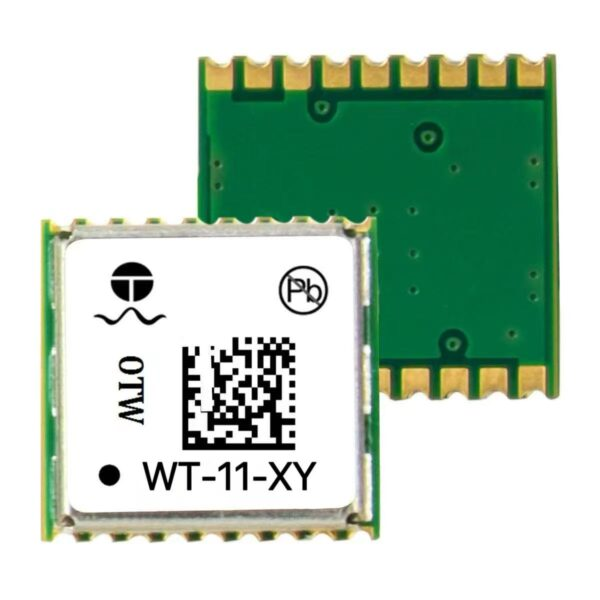
Thankfully, 2026 technology offers a powerful solution. The GNSS module for pet tracking now uses dual-band L1+L5 support. This advanced tech provides “sidewalk-level” accuracy for your furry friends. This article explains how L1+L5 solves urban tracking problems. We will show you why your pet needs this upgrade. Your peace of mind starts with better signal precision. 🐕🦺
The Urban Canyon Challenge: Why Standard GPS Fails
Cities are “urban canyons” for radio waves. Tall buildings create a phenomenon called “multipath interference.” 🏢 Standard L1-only trackers struggle in these environments.
What is Multipath Interference?
Satellite signals often bounce off glass and concrete. A single-band receiver gets confused by these echoes. Consequently, the device calculates a wrong position. Your tracker might show your pet a block away from its actual spot. This error makes finding a lost pet much harder.
Signal Blockage and Attenuation
Narrow streets limit the number of visible satellites. Furthermore, heavy tree cover in parks weakens the L1 signal. These obstacles cause “signal drift” or total connection loss. For a pet owner, these “blind spots” are dangerous. A GNSS module for pet tracking must overcome these hurdles to be effective.
The Science of L1+L5 Dual-Band Support
Dual-band GNSS uses two separate frequencies from the same satellite. It combines the legacy L1 signal with the modern L5 signal. 🛰️
-
L1 Band (1575.42 MHz): The standard civilian frequency used for decades.
-
L5 Band (1176.45 MHz): A higher-power, “safety-of-life” frequency.
By receiving both, the GNSS module for pet tracking compares the data. It calculates the time difference between the two waves. This process helps the module identify and ignore reflected signals. Consequently, the device provides a much more stable location fix. It is like having two sets of eyes instead of one. 👁️👁️
Key Benefits of L5 for Urban Pet Safety
The L5 frequency is specifically designed for challenging environments. It offers several technical advantages for pet wearables.
Higher Signal Power and Bandwidth
L5 signals are twice as powerful as L1 signals. ⚡ This extra strength helps the signal penetrate urban foliage and light structures. Furthermore, L5 has a wider bandwidth. This allows the module to distinguish the “direct” signal from “echoes” more easily. Your pet’s location stays precise, even under a thick canopy of city trees.
Better Ionospheric Correction
The atmosphere can delay satellite signals at different rates. By using L1 and L5 together, the module corrects these errors automatically. This leads to sub-meter accuracy in many situations. In a city, being accurate within one meter is a lifesaver. You can see exactly which side of the street your pet is on.
Faster Time-to-First-Fix (TTFF) in Busy Areas
When your pet runs out the door, every second counts. 🕒 You need a location fix immediately.
Traditional modules take time to “lock” onto satellites in cities. However, a multi-band GNSS module for pet tracking speeds this up. It accesses more signal data from multiple constellations like GPS, Galileo, and BeiDou. Consequently, the tracker finds your pet’s location in seconds. This fast response time reduces the window of danger. It ensures you can track your pet before they move too far.
Reducing Power Consumption for Longer Battery Life
Battery life is the biggest hurdle for pet wearables. 🔋 Owners hate charging trackers every single night.
Surprisingly, L1+L5 tech can actually save energy. Because the module finds a position faster, it spends less time “searching.” The internal processor can enter “sleep mode” more frequently. Therefore, your pet’s collar lasts longer on a single charge. You get better accuracy without sacrificing the device’s runtime. It is a win-win for both pets and owners. 🌟
Future-Proofing Your Pet’s Safety in 2026
The global satellite infrastructure is constantly evolving. Modern satellites are launching with L5 capabilities every month. 🚀
Investing in a dual-band GNSS module for pet tracking is a smart move. It ensures your device stays compatible with the newest satellite upgrades. Older L1-only devices will soon feel slow and inaccurate. A multi-band tracker provides the highest level of security available today. It is a premium choice for dedicated pet parents. Your pet deserves the best protection technology can offer.

Sidewalk-Level Peace of Mind
In summary, L1+L5 support is a game-changer for city dwellers. It effectively eliminates the “urban canyon” errors that plague old trackers. The GNSS module for pet tracking becomes a reliable lifesaver. It offers better penetration, higher accuracy, and faster response times. 🐶
Don’t let signal echoes hide your pet from you. Upgrade to a multi-band solution for the most reliable tracking experience. Keep your adventurous cats and dogs safe in the concrete jungle. With the right technology, you are always just one click away from your pet. 🗺️✨